What Is Just-In-Time? The Role Of JIT Transportation In The JIT Inventory Management Model
Read More
Published: July 15, 2024
Last Updated: June 1, 2026

Speed. Precision. Control.
When Every Minute Counts
A single missed delivery can halt a production line, delay a launch, or cost millions in lost time. In those moments, expedited transportation becomes the backbone of business continuity, ensuring time-sensitive freight moves quickly, securely, and with complete visibility.
This guide has been created for those new to expedited transportation and aims to provide you with an in-depth understanding of the service. Let’s dive deeper into this critical aspect of logistics, covering its definition, benefits, applications, and much more.


Expedited transportation is a solution for shipping time-sensitive or perishable goods that demand immediate delivery.
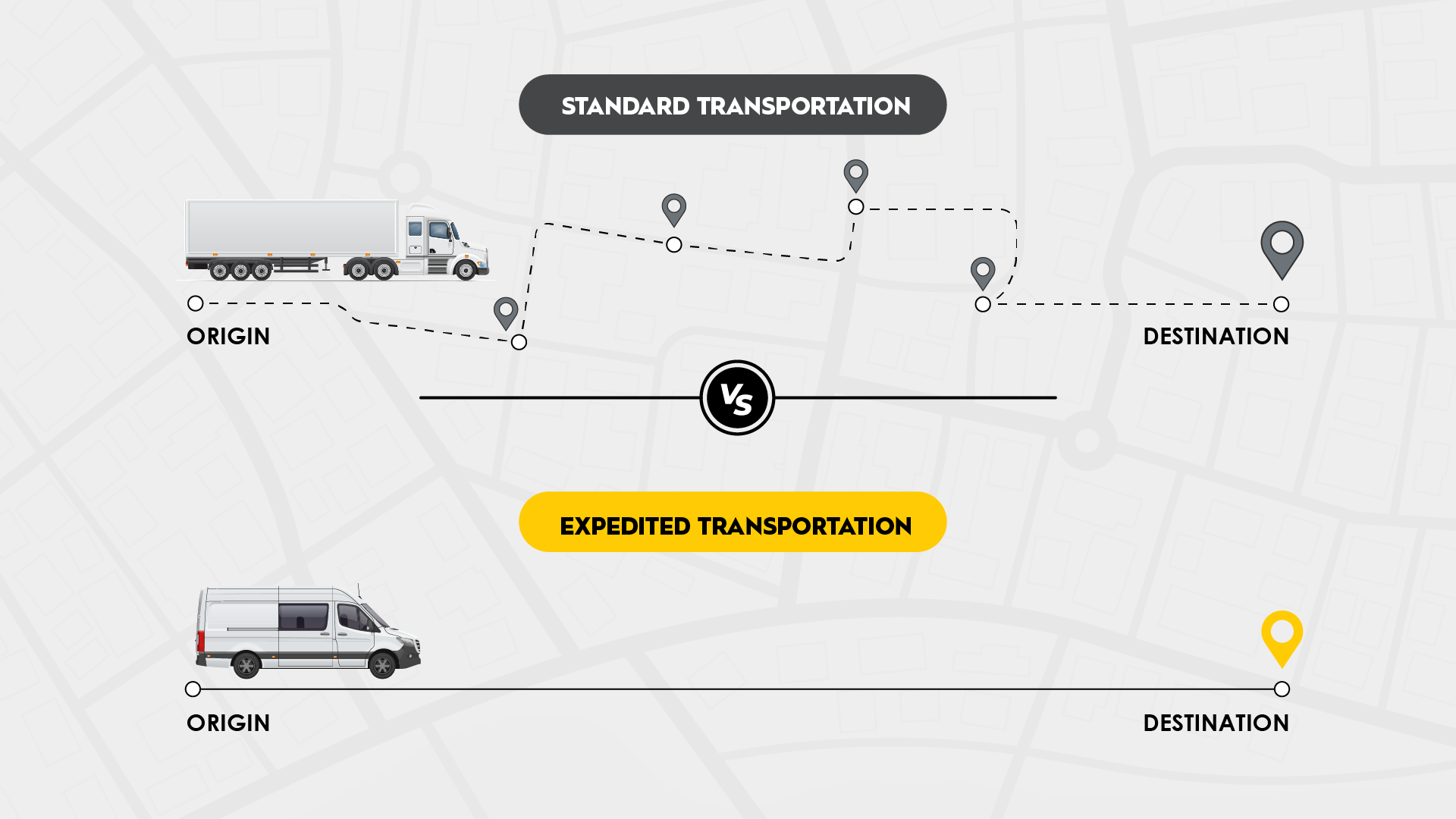
Unlike standard modes, which often consolidate shipments or follow hub-and-spoke routes, expedited loads move point-to-point on dedicated equipment with high-touch attention from expedited experts.
The focus is on speed, visibility, and control. Every shipment is planned to minimize stops, transfers, and handling so that freight reaches its destination exactly when it is needed.
Expedited service can be performed by ground or air, depending on distance and urgency, and may include options such as sprinter vans, straight trucks, hotshot trucks, or air transportation.
In urgent and time-sensitive shipping, even minor disruptions can lead to significant problems. Expedited transportation service acts as a crucial tool, ensuring that your shelves stay stocked, production lines remain active, and customer expectations are consistently met. Expedited offers:
Expedited transportation offers speed and safety, making it an ideal choice for urgent freight.
Expedited transportation isn’t about moving faster at any cost – it’s about precision, reliability, and communication. – Matt Meyer
Expedited shipping becomes the right choice when timing is critical, and traditional modes cannot meet a specific deadline or recovery need.
Common scenarios include:
Expedited transportation is not limited to emergencies. Many companies integrate it as a strategic safeguard within their logistics network, using it to protect uptime and maintain service consistency when unexpected challenges arise.
Expedited transportation serves both reactive and proactive purposes. It’s perfect for unplanned disruptions like line shutdowns, sudden demand spikes, delays, and urgent testing of samples.
Proactively, it can help you avoid costly delays, missed deadlines, and production shutdowns.
Industries that Commonly Use Expedited Transportation Services:
It’s important to note, it’s not limited to these sectors. Expedited is a versatile solution for innumerable industries.
Selecting the right equipment is key to balancing speed, capacity, and cost efficiency as well as the integrity of the freight. The goal is to right-size equipment, ensuring shipments move fast without paying for more capacity than necessary.
| Equipment Type | Capacity | Best Use | Typical Range | Average Distance per 24 hr |
| Sprinter Van | Up to 3,000 lb | Small, urgent shipments | 800 to 1,000 mi | About 1,000 mi |
| Hotshot Truck | Varies | Flatbed freight with urgency | Regional | About 600 mi |
| Straight Truck | Up to 10,000 lb or 12 pallets | Mid-size hauls | 800 to 1,500 mi | About 750 mi |
| Air Transportation | – | Long-distance or international freight | Nationwide or global | Door-to-door |
The right equipment keeps speed efficient and costs strategic. – Matt Meyer
If you have questions about which vehicle is the best fit, our expedited team can guide you through the options and help match your load to the right timeline.
Expedited transportation often includes specialized services for challenging or high-touch deliveries. These shipments require more than speed; they demand planning, coordination, and experience.
Common specialized requirements include:
Expedited teams are trained to handle diverse scenarios, maintaining precision and professionalism regardless of site or schedule.

Just-in-Time (JIT) Support
JIT supply chains depend on precise coordination to keep production lines running with minimal inventory. While standard modes typically sustain these programs, expedited service becomes essential when disruptions threaten continuity.
Expedited transportation allows JIT operations to recover quickly from unplanned delays, ensuring uptime and maintaining production flow.
Expedited transportation is not a reaction to problems. It is a strategy for resilience. – Matt Meyer
High-Risk High-Value (HRHV) Shipments
High-Risk High-Value shipments require additional layers of visibility and security to protect sensitive or high-value goods. These loads often involve products such as aerospace parts, medical devices, or electronics that demand uninterrupted visibility, higher insurance requirements, and stricter driver vetting.
While all expedited shipments are handled with precision and real-time 24/7 monitoring, HRHV freight applies enhanced procedures, such as:
Resilience means knowing exactly where your freight is, and when it will arrive. – Matt Meyer
Transparency and communication define effective expedited logistics. Understanding each stage helps shippers set expectations and plan proactively.
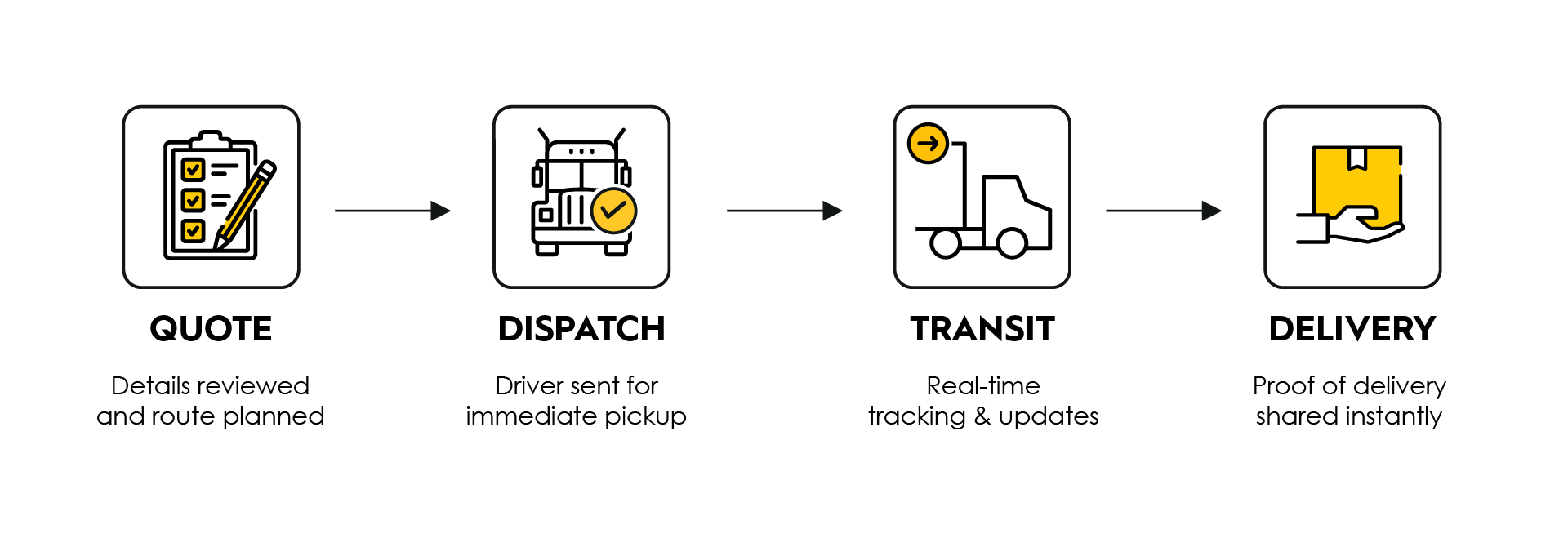
Expedited logistics is about control, not chaos. Every minute has a plan. – Matt Meyer
Selecting the right partner is crucial. Look for a provider aligned with your company’s goals, offering insights, and anticipating shipping conditions. Strategic collaboration with a multi-modal 3PL (third-party logistics provider) experienced in expedited services can provide better capacity and customized solutions.
Embrace expedited transportation services as a proactive strategy to fortify your supply chain operation against unforeseen challenges. With the right transportation partner, expedited services transform from a necessity into a strategic asset. This ensures your logistics operations remain resilient, efficient, and prepared to tackle any obstacle that may arise.
Expedited transportation is not just about moving freight faster. It is about keeping operations running when timing, precision, and communication matter most.
Used strategically, it provides flexibility, protects uptime, and ensures that supply chains perform even under pressure.
When time, control, and visibility converge, that is high performance logistics. – Matt Meyer
Want to understand where expedited fits in your supply chain?
Connect with an Expedited Specialist to analyze your lanes and discover where time truly adds value.
Transit times vary by lane. Ground expedited often delivers same day or next day regionally, while expedited air can connect major North American airports within hours.
Common options include sprinter vans, hotshots, straight trucks, and air transportation, selected based on weight, distance, and delivery requirements.
Not exactly. Express shipping is usually a parcel-level service, while expedited transportation refers to dedicated vehicles or air transportation for larger or business-to-business shipments.
Yes. Many companies integrate expedited service as a contingency layer within their supply chain, providing agility when standard capacity is constrained.
Most expedited providers offer live status updates or frequent driver check-ins to ensure visibility and peace of mind.
Up to 500,000 dollars with additional insurance available if required.