The NAX Index – September 2026
Read More
Published: September 18, 2026
Last Updated: September 18, 2026
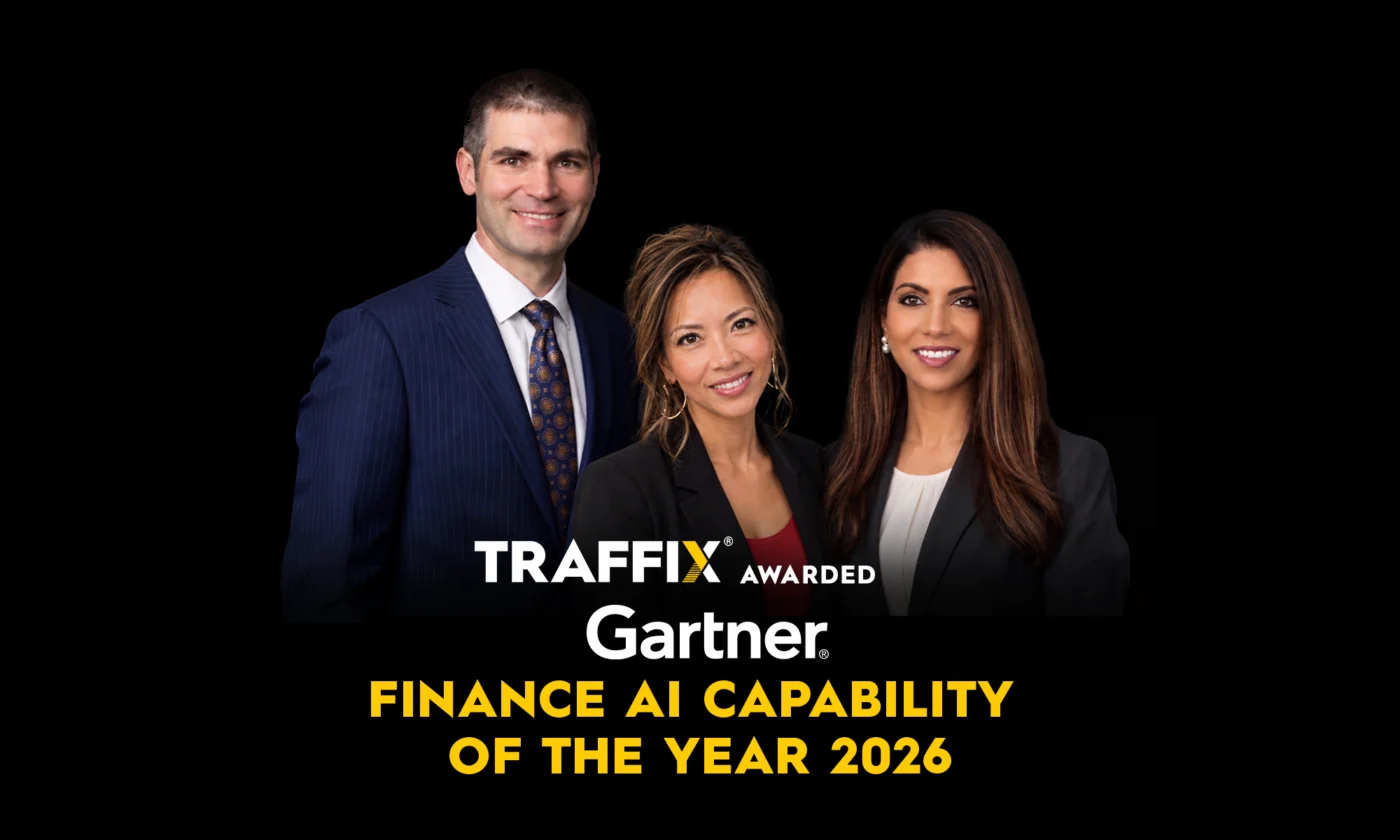
TRAFFIX has been recognized in the 2026 Gartner Finance Awards for its AI-powered margin-to-cash operating system, an interconnected set of capabilities designed to support the business from pricing an opportunity through payment collection.
Rather than applying AI to isolated tasks, TRAFFIX has connected capabilities across pricing, carrier procurement, credit, billing and collections. The result is a more integrated approach that helps teams make faster decisions, reduce manual work and support continued growth without increasing resources at the same pace.
For Dilanthi De Alwis-Mummert, Chief Financial Officer at TRAFFIX, that ability to scale is one of the initiative’s most significant outcomes.
The biggest financial impact has been our ability to scale the business more efficiently. By using AI and automation across key finance processes, we have improved productivity, sped up decision-making, strengthened controls and reduced manual work. That creates operating leverage and allows Finance to support continued growth without increasing costs at the same pace.
TRAFFIX’ AI ecosystem brings together several capabilities across the transaction lifecycle. ATLAS, TRAFFIX’ proprietary pricing engine, supports pricing decisions and can autonomously respond to eligible quote requests. MatchMaker helps identify carriers for individual loads, while HighRadius supports collections, cash application and credit workflows. Microsoft Fabric provides a shared data foundation across the ecosystem.
Together, these capabilities help information reach the right people faster, reduce repetitive work and support better decisions throughout the margin-to-cash process.
AI has allowed us to move faster and do more with better results. Some improvements get insights to the right people faster, others remove repetitive work, and some allow us to take advantage of our unique competitive edges.
Alex Fuller – Vice President, Commercial Intelligence
The impact is already showing up in measurable business results. During its real-time quoting pilot, ATLAS autonomously responded to more than 40,000 eligible quote requests, allowing TRAFFIX to pursue opportunities that otherwise may not have been addressed.
AI-supported RFP pricing has also allowed the team to increase RFP wins approximately 40% without adding headcount.
Across Order-to-Cash operations, TRAFFIX reduced its cash conversion cycle from eighteen days to two days, improved collector efficiency by 43%, reduced credit approval turnaround by 60%, and automated 99% of credit reviews.
But the shift is not only about moving transactions faster. It is also changing how employees spend their time.
The biggest impact has been moving our teams from information gathering to decision-making. AI puts the information at their fingertips, allowing them to focus on analysis and action. It has elevated the work our teams do every day, making it more meaningful and fulfilling.
An Samimi – Vice President, Finance Operations
TRAFFIX’ approach also allows employees closest to a business problem to help shape potential solutions. With centralized data and governed access to generative AI tools, front-line analysts can prototype ideas that Technology can then test, secure and scale across the organization.
The partnership between Finance and Technology has been central to that work, with Marc Knoop, Sheri Iannuccilli, Jey Yogendran, Gary Palin, and Robert Westhaven all playing important roles in bringing these capabilities to life.
Across the portfolio, TRAFFIX estimates its AI and automation initiatives have helped avoid the need for approximately 15 to 20 additional full-time employees, while creating capacity to manage greater volume and complexity.
The Gartner recognition marks an important milestone in TRAFFIX’ work to build a more connected and scalable business. As these capabilities continue to evolve, the opportunity extends beyond efficiency, helping teams make better decisions, pursue new opportunities, and create the capacity to support continued growth.