Solar Panel Packaging & Handling Best Practices
Read More
Published: October 14, 2026
Last Updated: October 8, 2026
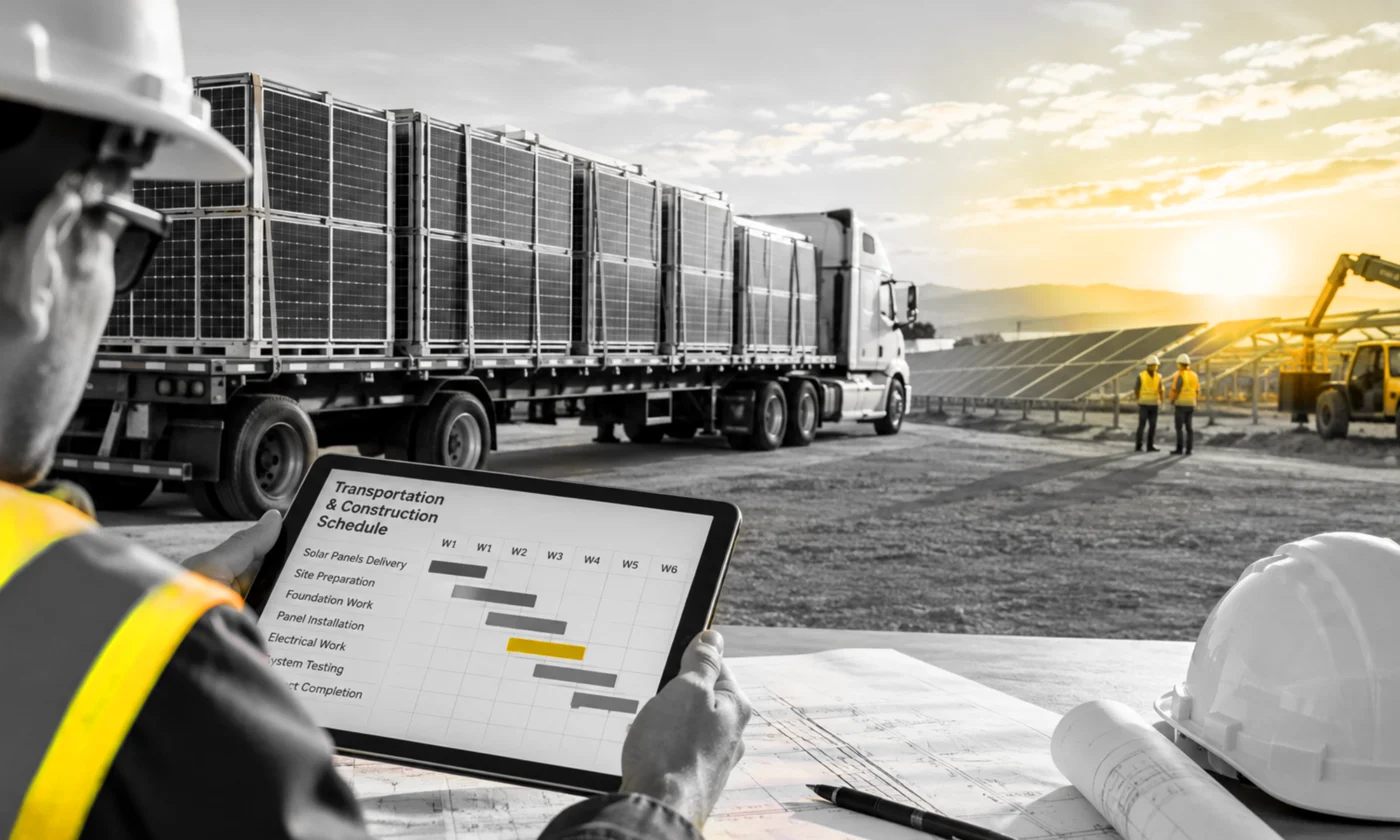
Transportation planning plays a critical role in keeping utility-scale solar projects on schedule. While moving freight efficiently is important, successful logistics strategies are built around construction milestones, site readiness, and installation sequencing rather than transportation availability alone.
Delivering freight on time doesn’t always mean delivering it at the right time. If the site isn’t ready to receive materials, even a perfectly scheduled shipment can create congestion, unnecessary handling, and additional costs. That’s why transportation planning should support construction, not the other way around.
In utility-scale solar projects, delivering freight on time doesn’t always mean delivering it at the right time. A shipment can arrive exactly as scheduled and still create delays if civil work isn’t complete, unloading equipment isn’t available, or installation crews aren’t ready to receive the materials.
Successful logistics planning begins long before a shipment is dispatched. Manufacturing timelines, transportation capacity, site readiness, and installation sequencing all influence when materials should arrive. Looking at these activities together helps project teams make transportation decisions that support construction instead of working against it.
When deliveries are planned around project milestones rather than deliveries availability, materials can move through the supply chain more efficiently. This approach helps reduce unnecessary handling, avoid congestion on site, and keep crews supplied with the materials they need as each phase of construction progresses.
Ultimately, transportation is measured by more than pickup and delivery dates. In utility-scale solar, success comes from delivering materials when they’re ready to be installed, allowing freight movement to support construction instead of determining its pace.
Construction schedules are constantly evolving, especially on large utility-scale solar projects. Weather conditions, permitting timelines, subcontractor availability, and changes to installation sequencing can all influence when materials are needed on site. These adjustments are a normal part of project execution and don’t necessarily indicate that something has gone wrong.
The challenge is making sure transportation plans can adapt as those conditions change. When logistics strategies are built around fixed delivery dates instead of construction progress, even minor schedule adjustments can result in unnecessary storage, repeat deliveries, additional handling, or equipment sitting idle until crews are ready.
Building flexibility into the logistics plan allows project teams to respond without disrupting the flow of materials. Temporary warehousing, inventory staging, and phased deliveries provide options when construction activities shift, helping ensure materials remain available without overwhelming the job site.
Rather than treating schedule changes as freight movement problems, experienced logistics teams plan for them from the beginning. The ability to adapt isn’t a contingency plan, it’s an essential part of supporting utility-scale solar projects from procurement through installation.
Site readiness means a project is prepared to safely receive materials before the first truck arrives. It includes confirming that access roads are complete, unloading equipment is available, staging areas are ready, and delivery procedures have been communicated so shipments can move efficiently from the trailer to the installation area.
Preparing a site for delivery takes planning across multiple teams. Construction managers, contractors, and logistics providers need to coordinate well before freight begin moving to confirm that the site can safely receive and stage incoming shipments. Addressing these details in advance helps prevent unnecessary delays once trucks arrive.
Site readiness also improves transportation efficiency. When unloading activities are planned ahead of time, drivers spend less time waiting, shipments can be staged more effectively, and crews can begin installation sooner. These small improvements help keep freight moving while reducing unnecessary handling and congestion on site.
Logistics planning doesn’t end when a shipment is dispatched. It continues until the site is ready to receive, unload, and position materials for the next phase of construction. The more prepared the site is before delivery, the more efficiently transportation can support the project.

Successful transportation plans are designed to adapt as project conditions change. Instead of relying on fixed delivery dates, experienced logistics teams build flexibility into the supply chain so shipments can move when construction is ready for them.
One way to achieve that flexibility is through temporary warehousing and inventory staging. Rather than delivering every shipment directly to the construction site, solar panels can be stored closer to the project and released in phases as different areas become ready for installation. This approach helps maintain a steady flow of materials without overwhelming the job site.
Flexible logistics approach also depends on communication. Regular updates between project teams, suppliers, warehouses, and transportation providers make it easier to adjust delivery schedules as construction progresses. When everyone is working from the same timeline, changes can often be addressed before they affect the project.
Flexibility doesn’t prevent construction schedules from changing, but it allows logistics teams to respond with minimal disruption. The ability to adjust deliveries, reposition inventory, and support changing project priorities helps keep freight moving while maintaining progress on site.
Transportation planning is most successful when it’s measured by project outcomes rather than delivery dates alone. While on-time pickup and delivery remain important, they don’t always reflect whether materials arrived when the project was ready to use them.
Aligning freight movement with construction milestones helps reduce unnecessary handling, improve communication across stakeholders, and ensure shipments are available when each installation phase is ready to begin. When logistics decisions are based on project progress instead of transportation availability, deliveries become part of the construction strategy rather than a separate process.
This approach also strengthens collaboration between transportation providers, suppliers, warehouse operators, and construction teams. Sharing information and planning together makes it easier to respond to changing conditions while maintaining visibility across the supply chain.
As utility-scale solar projects continue to grow in size and complexity, logistics planning becomes more than a scheduling activity. It becomes a strategic advantage that helps projects adapt to changing conditions, protect valuable equipment, and keep construction moving forward.
As utility-scale solar projects continue to grow in size and complexity, logistics becomes more than a way to move freight. It becomes a critical part of project execution, helping ensure materials arrive when construction is ready for them. When transportation supports the pace of the project instead of setting it, every stage of the supply chain works together toward the same goal: keeping construction moving forward.