Mexico Cross-Border Shipment Readiness Checklist
Read More
Published: October 7, 2026
Last Updated: October 8, 2026
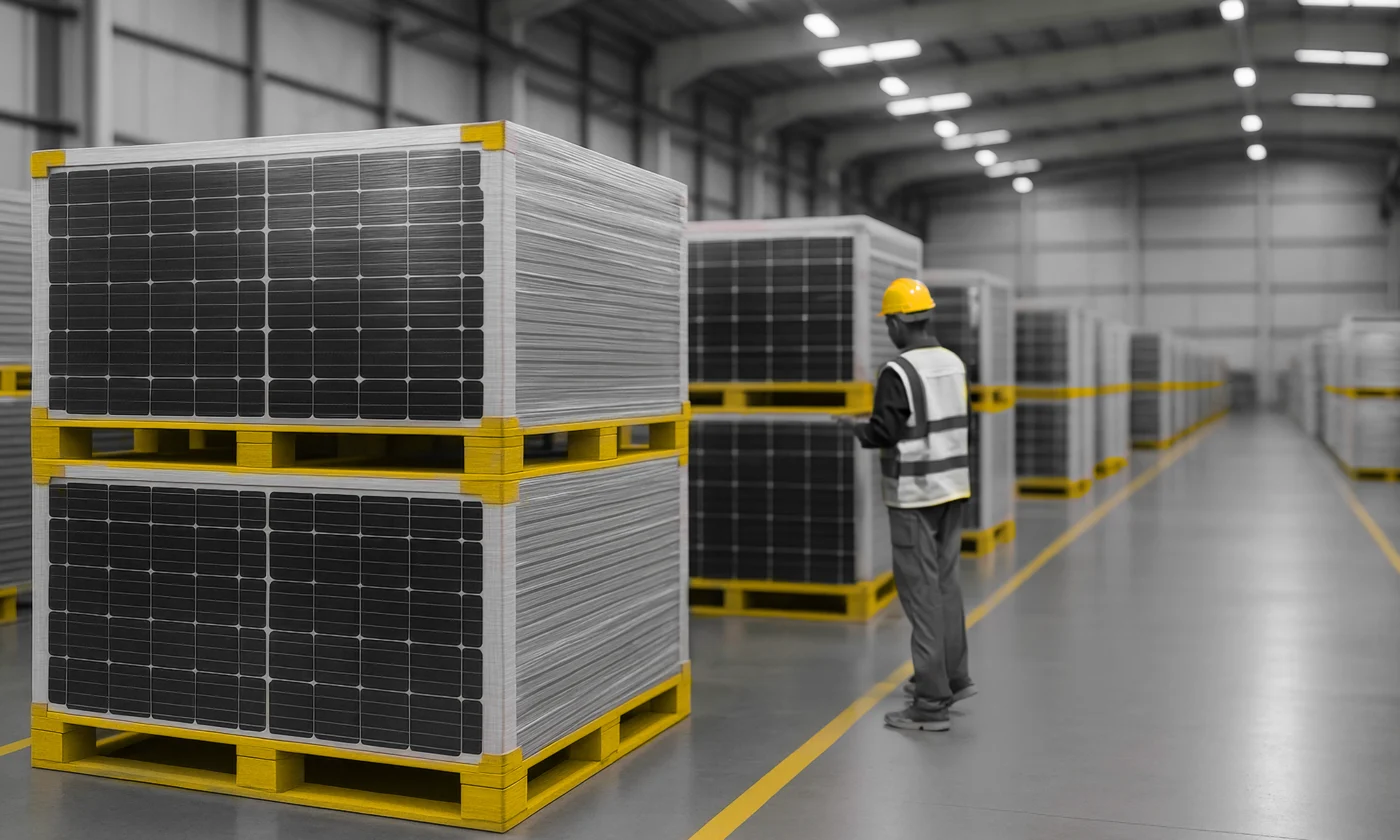
A solar panel doesn’t need to arrive shattered to have been damaged in transit. Improper lifting, loading, unloading, or repeated handling can create issues that may not be immediately visible but can affect the condition and performance of the module after installation.
So, how should solar panels be handled throughout the journey? This article looks at why proper handling matters, how solar panels can be damaged without visible signs, how transportation and warehousing teams can reduce handling risk, and what project teams should consider when panels are received at the construction site.
Manufacturer packaging is designed to protect solar panels during transportation and should remain intact whenever possible. For utility-scale projects, panels are typically secured on manufacturer pallets engineered to support the weight of the modules, limit movement during transit, and simplify handling across multiple stages of the supply chain.
Keeping panels in their original shipment configuration can also help them remain supported and organized as intended by the manufacturer throughout transportation and storage.
If packaging is damaged during transit, teams should document the condition of the shipment and follow the applicable manufacturer and project procedures before the panels continue through the supply chain.
Even when solar panels arrive without visible damage, improper handling can still affect their condition. Excessive vibration, rough handling, or incorrect loading practices can create microcracks within photovoltaic cells that aren’t visible during a standard inspection but may impact long-term performance once the panels are installed.
Reducing that risk starts with following the manufacturer’s handling guidelines at every stage of the journey. Using appropriate material-handling equipment and ensuring everyone involved understands how shipments should be lifted, loaded, secured, moved, and unloaded can help protect panels from conditions that may cause damage.
For projects where damage is suspected, some organizations use electroluminescence (EL) testing to identify microcracks that can’t be seen during a visual inspection. While not every shipment requires this level of evaluation, it highlights an important reality: protecting solar panels isn’t just about preventing visible damage. It’s also about reducing the conditions that can create hidden issues before installation begins. microcracks within photovoltaic cells that aren’t visible during a standard inspection but may impact long-term performance once the panels are installed.
Reducing that risk starts with following the manufacturer’s handling guidelines at every stage of the journey. Using appropriate material-handling equipment and ensuring everyone involved understands how shipments should be lifted, loaded, secured, moved, and unloaded can help protect panels from conditions that may cause damage.
For projects where damage is suspected, some organizations use electroluminescence (EL) testing to identify microcracks that can’t be seen during a visual inspection. While not every shipment requires this level of evaluation, it highlights an important reality: protecting solar panels isn’t just about preventing visible damage. It’s also about reducing the conditions that can create hidden issues before installation begins.
Manufacturer handling guidelines aren’t just instructions for the installation crew. They can affect how solar panels are loaded, secured, transported, stored, unloaded, and moved at every stage of the supply chain.
Requirements vary by manufacturer and module packaging configuration, which is why transportation and warehouse teams should understand the applicable instructions before handling the shipment. Guidelines may specify how pallets should be lifted, whether they can be stacked, approved lifting points or orientations, storage requirements, and precautions that should be taken during loading and unloading.
Those requirements can influence logistics decisions before a truck ever arrives. The dimensions and configuration of the packaged modules may affect equipment selection and loading plans, while lifting requirements can determine what material-handling equipment a warehouse or job site needs to have available. Storage requirements should also be considered when panels will spend time at a staging facility before final delivery.
The information also needs to follow the shipment. Carriers, warehouses, transload facilities, and site teams that physically handle the panels should have the relevant requirements before the shipment arrives rather than discovering them during loading or unloading.
If packaging is damaged during transportation, teams should document its condition and follow the applicable manufacturer and project procedures before the panels continue through the supply chain.
Following manufacturer handling guidelines therefore isn’t a single step in the transportation process. It’s about incorporating the requirements of the specific modules and their packaging into the logistics plan from origin through final delivery.
Solar panel shipments may move through ports, warehouses, transportation providers, and construction sites before reaching their final destination. Each handoff requires the right equipment, procedures, and communication to keep the panels protected as they move through the supply chain.
Planning how materials will move before they arrive at each facility can help reduce unnecessary repositioning and keep handling organized. Warehousing and staging can also support project schedules by providing a controlled location for inventory before panels are needed at the job site.
Not every touchpoint can or should be eliminated. The goal is to make sure necessary transfers are planned in advance and completed using the appropriate equipment and handling procedures.
The safest supply chain isn’t necessarily the one with the fewest stops. It’s the one where every handoff is planned, equipped, and executed correctly.
Safe handling remains just as important after solar panels reach the construction site. Before delivery, project teams should confirm that appropriate unloading equipment is available, site access is clear, staging areas are prepared, and crews understand how the shipment is packaged and should be unloaded.
The final delivery should also be coordinated with the project’s installation schedule. When panels arrive, crews should have a clear plan for moving them from the trailer to the designated staging or installation area without interfering with other construction activities.
Shipments should also be inspected at receipt, with any visible damage documented before the panels are moved or the manufacturer packaging is broken down. Maintaining clear records at this stage can help identify when damage occurred and support any necessary follow-up.
Proper handling should continue until the panels are safely staged and ready for installation.
Use this checklist when planning handling, storage, and delivery for utility-scale solar panels:
Protecting solar panels depends on consistent practices throughout the supply chain. Proper handling, clear communication, and thoughtful planning can help protect modules as they move through transportation, warehousing, staging, and final delivery. Together, these practices can help reduce damaged modules, replacement shipments, and disruptions once installation begins.