The NAX Index – October 2026
Read More
Published: March 31, 2026
Last Updated: October 1, 2026
Market Overview
What This Means for the Market
Freight demand is softening, but that has not been enough to bring rates down. Capacity remains limited, keeping carriers selective and pricing elevated.
At the same time, fuel continues to be a major contributor to overall transportation costs. Even with some relief in diesel this week, shippers are still facing higher costs from both tight capacity and fuel as we move into Q4.
Areas to Watch
Strategic Considerations
Market Overview
What This Means for the Market
The market has been steady since Labor Day. Spot rates and rejections are no longer rising sharply, but they also have not fallen enough to show that capacity is opening up. Shipment volumes picked up after the holiday but remain about 3% below last year. Even with softer demand, truck availability is still limited, allowing carriers to remain selective.
The biggest change this week is fuel. Diesel has moved above $6 per gallon, adding more pressure to transportation costs. As we move toward Q4, shippers should expect costs to remain elevated, with fuel becoming a key factor to watch.
Areas to Watch
Strategic Considerations
Market Overview
What This Means for the Market
The market tightened heading into Labor Day. Spot rates and rejections are rising again, even though there is not significantly more freight moving. This suggests that capacity is still constrained, which gives carriers more choice over the loads they accept, and that keeps shipping costs elevated.
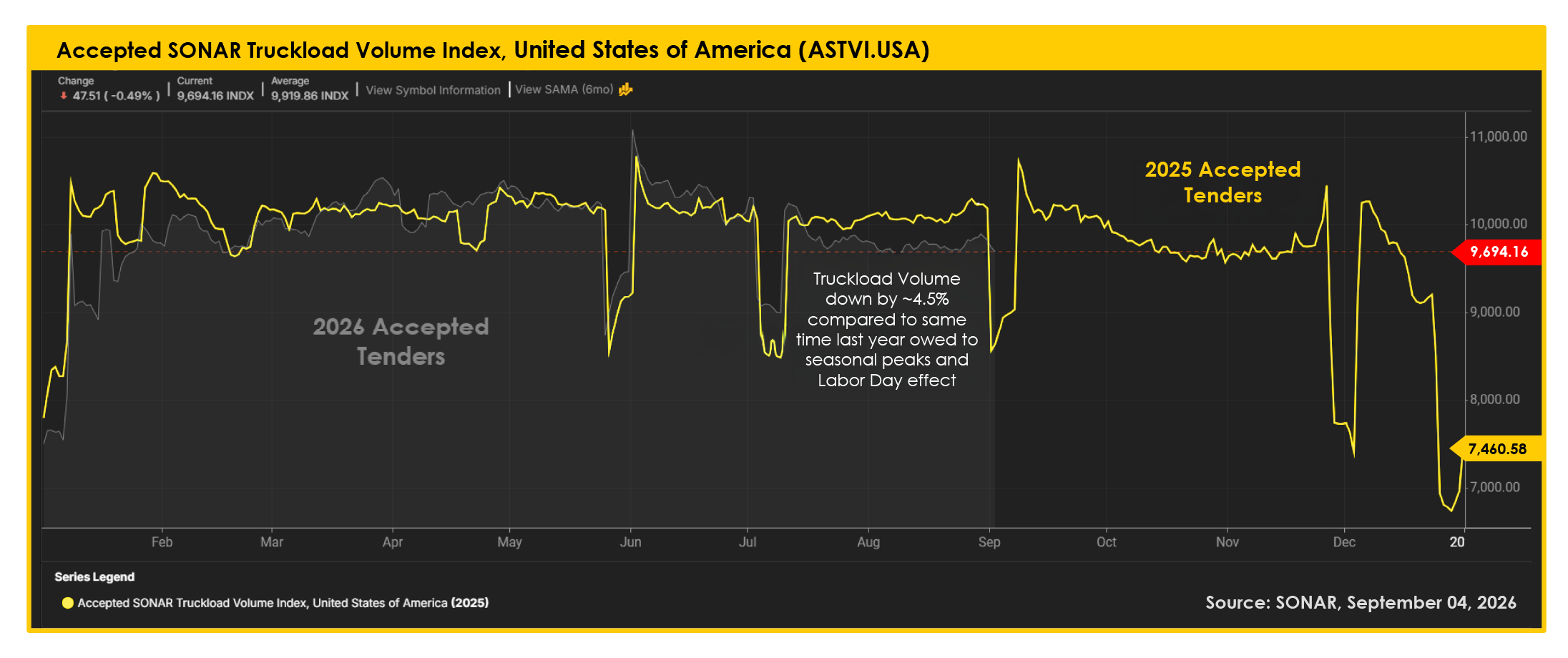
Labor Day added another short-term test for capacity. Holiday periods typically reduce available capacity for a short time, so some increase in rates and rejections is expected. Intermodal is still helping absorb some longer-distance freight. U.S. intermodal volumes were 6-7% higher YoY, giving shippers another option where rail service and transit times work for the shipment.
Areas to Watch
Strategic Considerations
Market Overview
What This Means for the Market
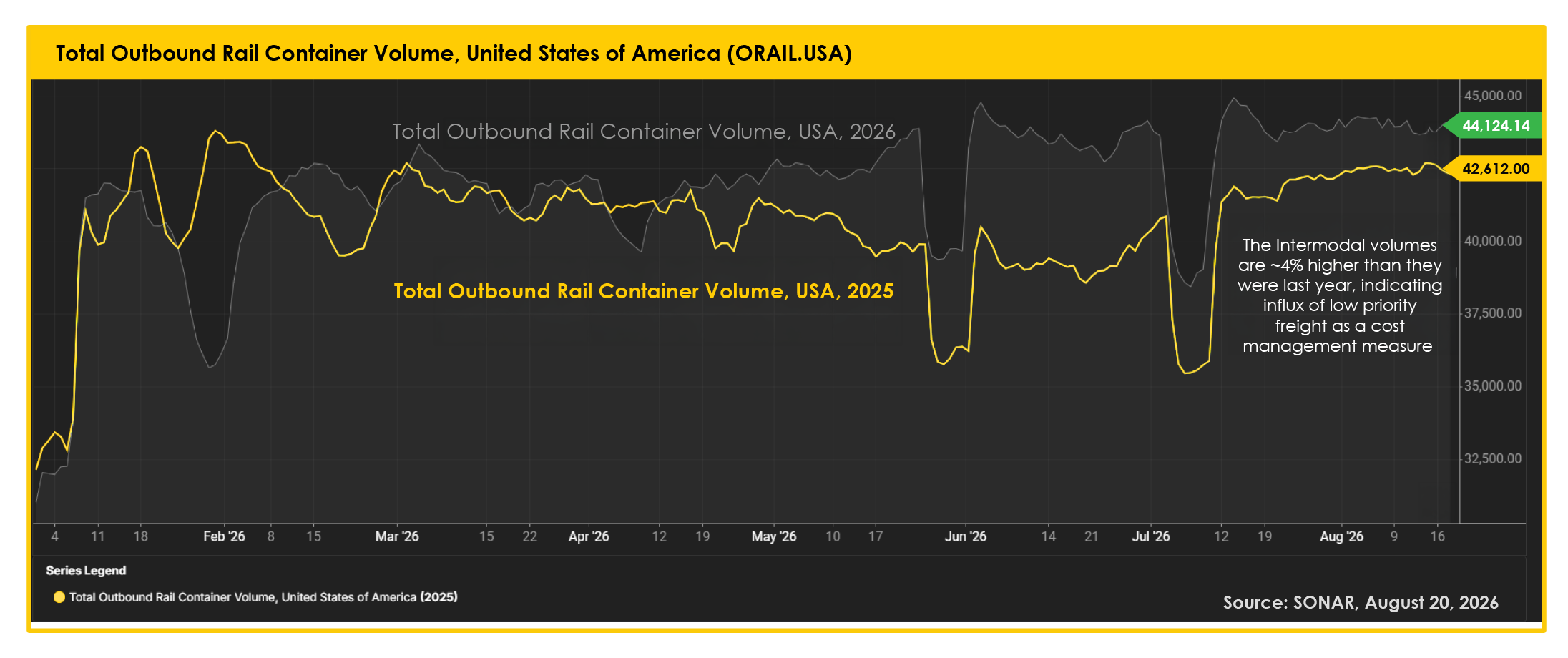
Truckload conditions are seeing some relief as demand softens and more freight shifts to intermodal. However, capacity remains tight enough that carriers continue to have pricing power on certain lanes. Lower spot rates are giving shippers some short-term relief, but carrier capacity is still tight. Contract rates remain high, so shippers should not expect overall transportation costs to come down just yet.
Intermodal is helping absorb some long-haul freight and remains an attractive alternative for shipments where longer transit times are acceptable.
Areas to Watch
Strategic Considerations
Market Overview
What This Means for the Market
The freight market has stabilized slightly following the July surge, but conditions are still tight. The market has moved from rapid increases to a more stable, but still expensive, environment.
Contract rates are also still catching up with the earlier rise in the spot market. This means transportation costs may continue to increase even if spot pricing remains steady. Intermodal is becoming a more attractive option as shippers look for ways to reduce costs and limit their exposure to tight truckload capacity.
For shippers, the focus should remain on protecting priority capacity, planning shipments earlier and using intermodal selectively where it offers a reliable and cost-effective alternative.
Strategic Considerations
Market Overview
What This Means for the Market
The July demand peak has eased, allowing spot rates and volumes to soften slightly from multi-year highs.
However, lower spot rates do not necessarily mean that capacity has fully recovered. Tender rejections remain above 15%, showing that carriers continue to have options when accepting freight.
Diesel prices are also rising again, keeping operating costs elevated. At the same time, contract rates are beginning to move higher as shippers compete for reliable capacity. Although the drop in spot rates offers some short-term relief, the market continues to favor carriers.
Areas to Watch
Strategic Considerations
Market Overview
What This Means for the Market
Shippers moved more freight ahead of the July 4 holiday and quarter-end, increasing demand for trucks and putting upward pressure on spot rates. Diesel has eased, but all-in spot rates remain elevated.
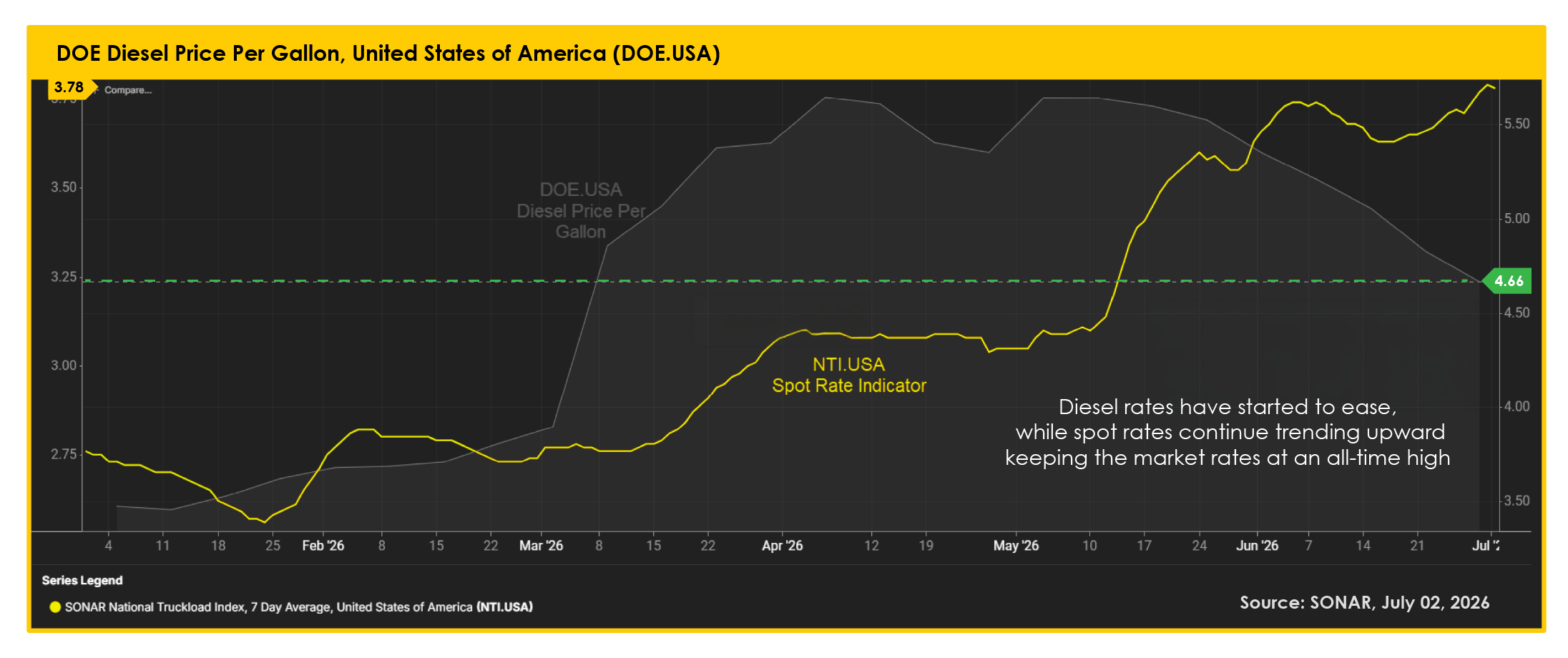
Spot rates are still above contract rates, which means last-minute or uncovered freight is being priced at a premium. This also suggests that routing guides may still be under pressure. Tender rejections near 17% show that carriers continue to have options and are not accepting every load.
Volumes dipped around the holiday, but remain higher year over year. For shippers, this means the market still favors carriers in the short term. Rates may ease after holiday networks reset, but current conditions do not point to immediate relief.
Areas to Watch
Strategic Considerations
Market Overview
What This Means for the Market
Current conditions point to a cooling period following Roadcheck and Memorial Day pressure, not a full market reset. While some indicators have softened, underlying cost pressure remains active and has not shown meaningful signs of relief.
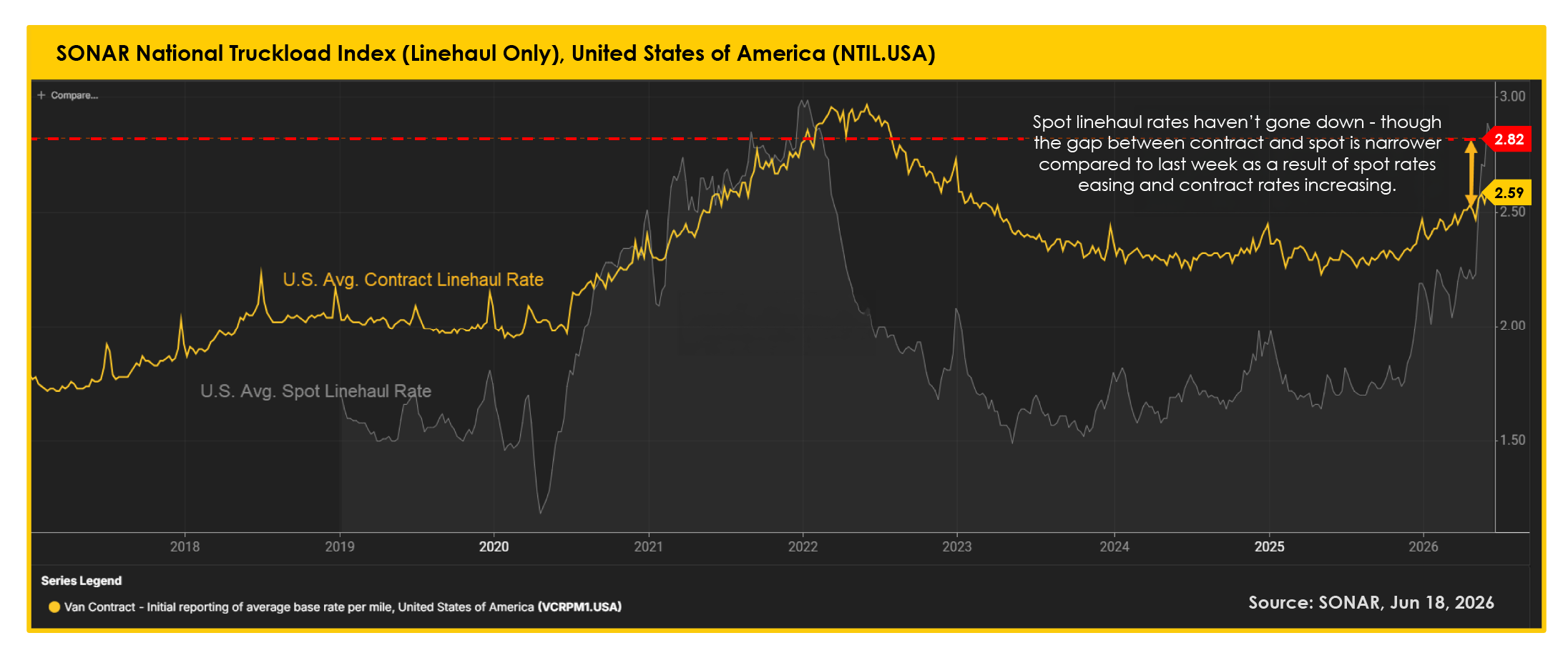
Linehaul spot rates continue to run above contract rates, meaning last-minute freight is still priced higher than planned contract freight. The gap between spot and contract rates has narrowed, but primarily because spot rates eased while contract rates moved higher. This suggests contract pricing is beginning to catch up to the elevated spot market rather than the market fully resetting.
Tender rejections remain elevated. Even with the slight dip, rejection rates near 17% indicate that carriers continue to hold leverage and are not accepting every contracted load.
Volumes are also still holding above last year. Even with a modest decline from two weeks ago, demand has not fallen enough to meaningfully loosen capacity.
For shippers, the main takeaway is that cost pressure remains active. The market may not be climbing as quickly as it was earlier in June, but it is also not returning to normal yet.
Areas to Watch
Strategic Considerations
Market Overview
What This Means for the Market
The market remains under pressure from a combination of regulatory challenges, broader economic uncertainty, and continued capacity constraints.
One of the strongest indicators of current market conditions is that linehaul spot rates remain above contract rates. This is a pattern not seen since the COVID freight cycle and suggests that capacity remains tighter than many expected following the holiday period.
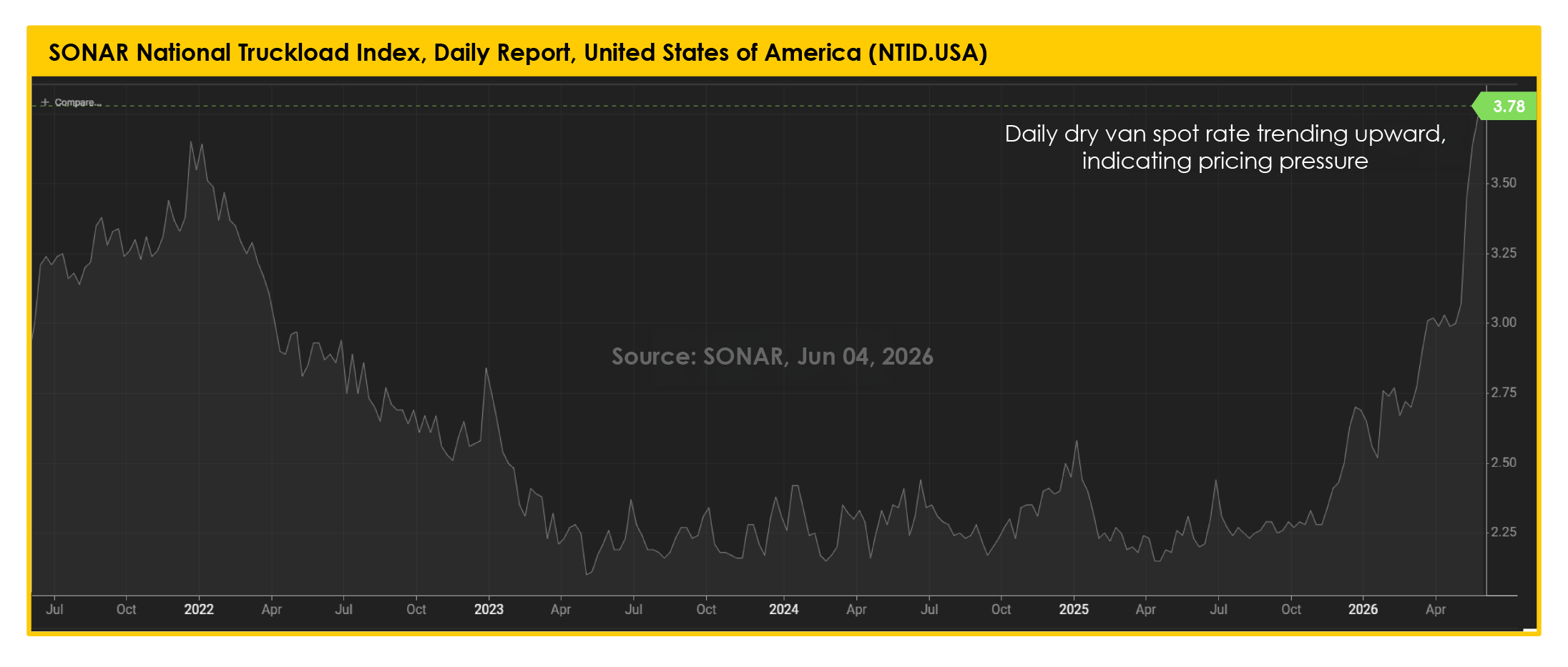
Last-minute freight continues to cost more than planned contract freight. When shippers need coverage outside of their contracted carrier network, they are still paying a premium, reflecting ongoing pressure in the spot market.
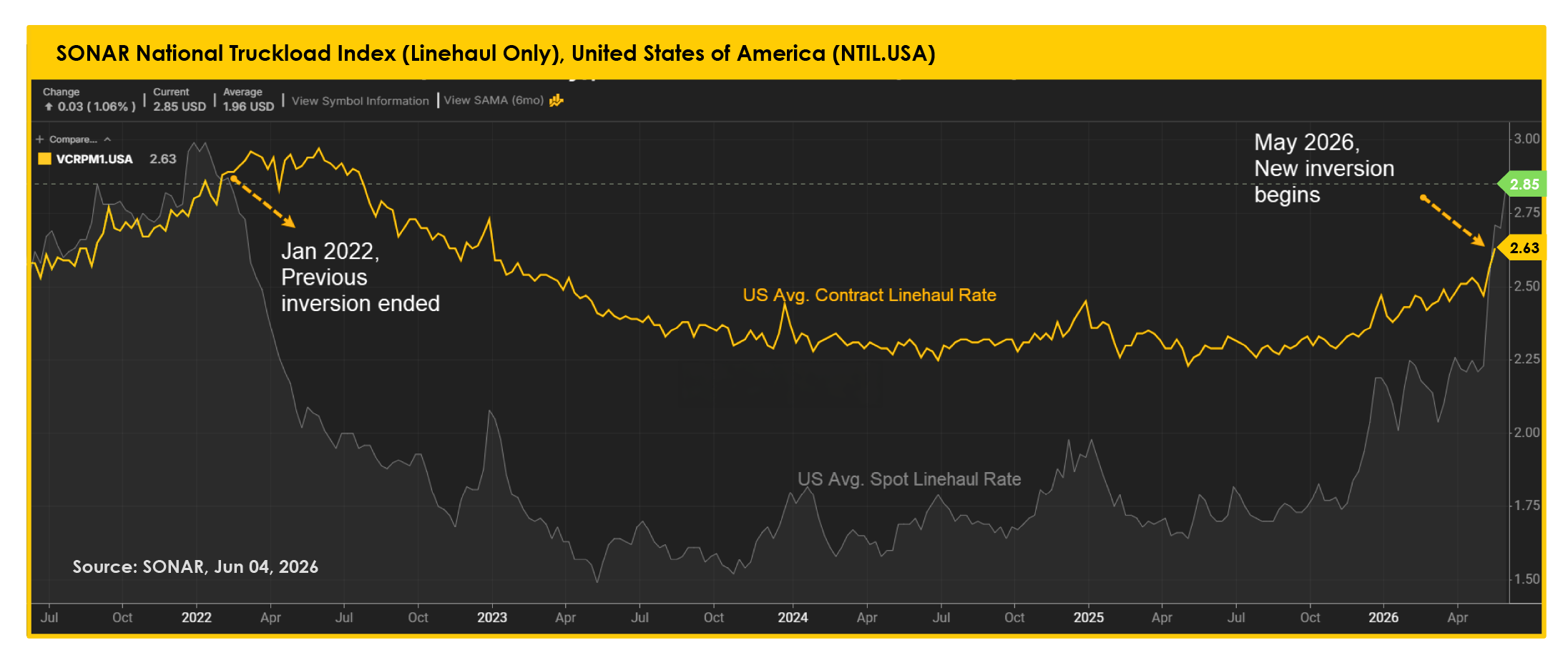
Tender rejections provide another important signal. With rejection rates above 17%, carriers are declining more contracted freight in favor of higher-paying opportunities elsewhere. As more freight shifts into the spot market, pricing pressure continues to build.
At the same time, freight volumes remain strong. Demand is increasing while available capacity remains constrained, preventing rates from resetting quickly and keeping market conditions firm heading into mid-June.
Areas to Watch
Strategic Considerations
Market Overview
What This Means for the Market
The market moved from tight to tighter over the past two weeks. What we are seeing now is the combined effect of DOT Week, summer freight activity, and continued fuel-driven pricing pressure.
DOT Week was expected to impact capacity, and it did. Fewer trucks were available, carriers became more selective, and spot rates jumped more than 10% week over week while rejection rates moved above 15%.
What stands out now is that rates are not quickly backing down after DOT Week. Instead, they are remaining elevated and continuing to climb. With Memorial Day adding another capacity disruption, the market could move toward some of the highest spot rates seen in recent years.
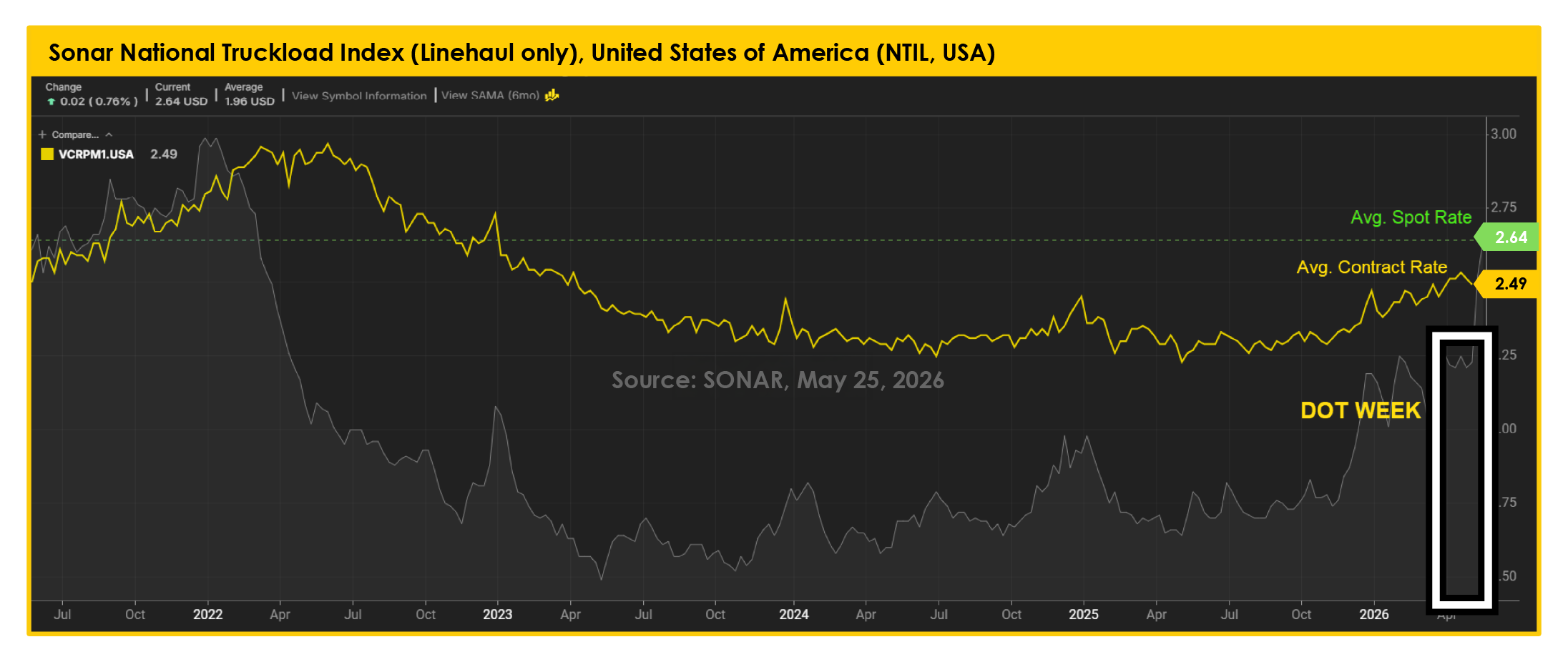
Spot linehaul rates temporarily moved above contract linehaul rates for the first time since 2022. In simple terms, last-minute freight became more expensive than planned contract freight. That is usually a strong signal that the market is tightening quickly.
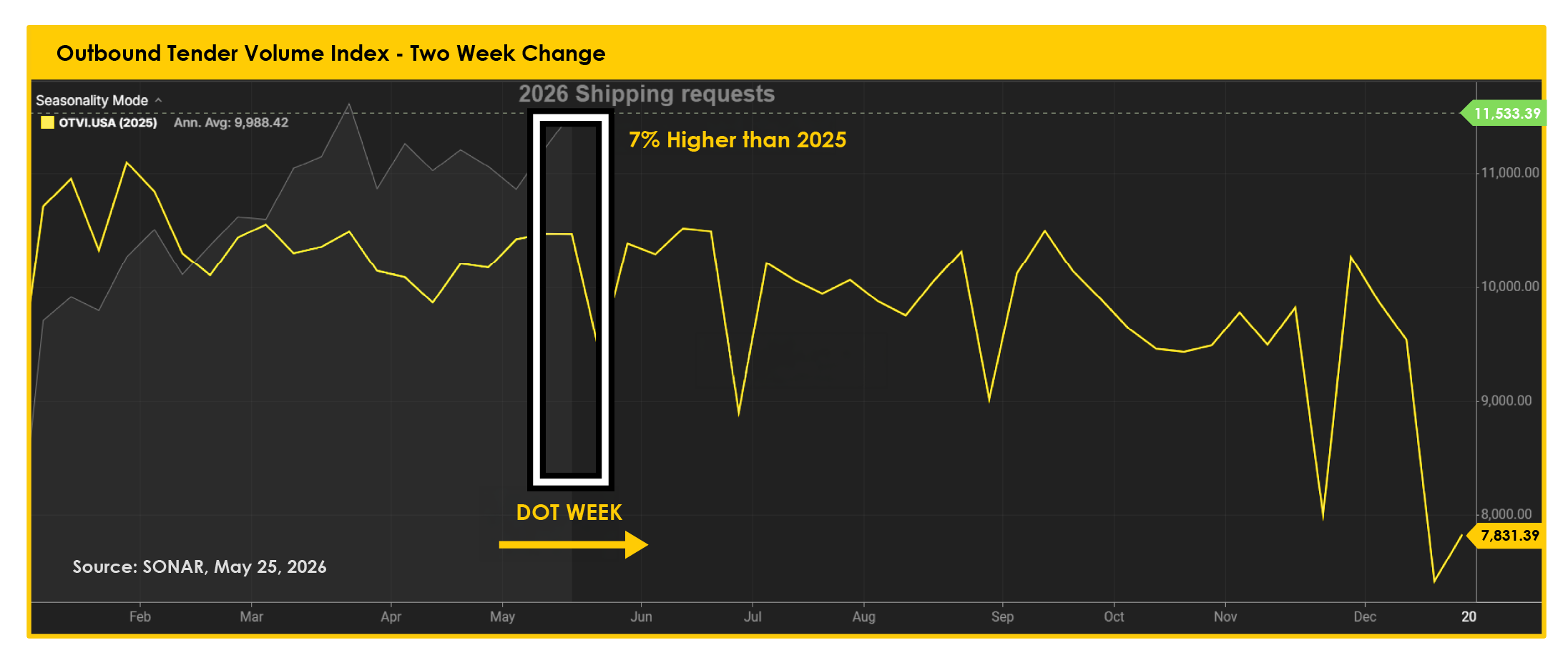
Shipping activity remains healthy, but truck availability is becoming increasingly constrained. DOT Week temporarily pulled capacity out of the market while freight demand continued moving higher. When more loads compete for fewer trucks, rates rise quickly.
With Memorial Day, produce season, and summer freight activity ahead, capacity could remain tight over the coming weeks.
Areas to Watch
Strategic Considerations
Market Overview
What This Means for the Market
The market is not loosening. Instead, conditions appear to be stabilizing before the next upward move.
Even with a slight dip in shipping volumes, rejection rates increased and spot rates held firm around the $3.00 mark. That combination matters because it shows that capacity remains limited, preventing any meaningful rate relief.
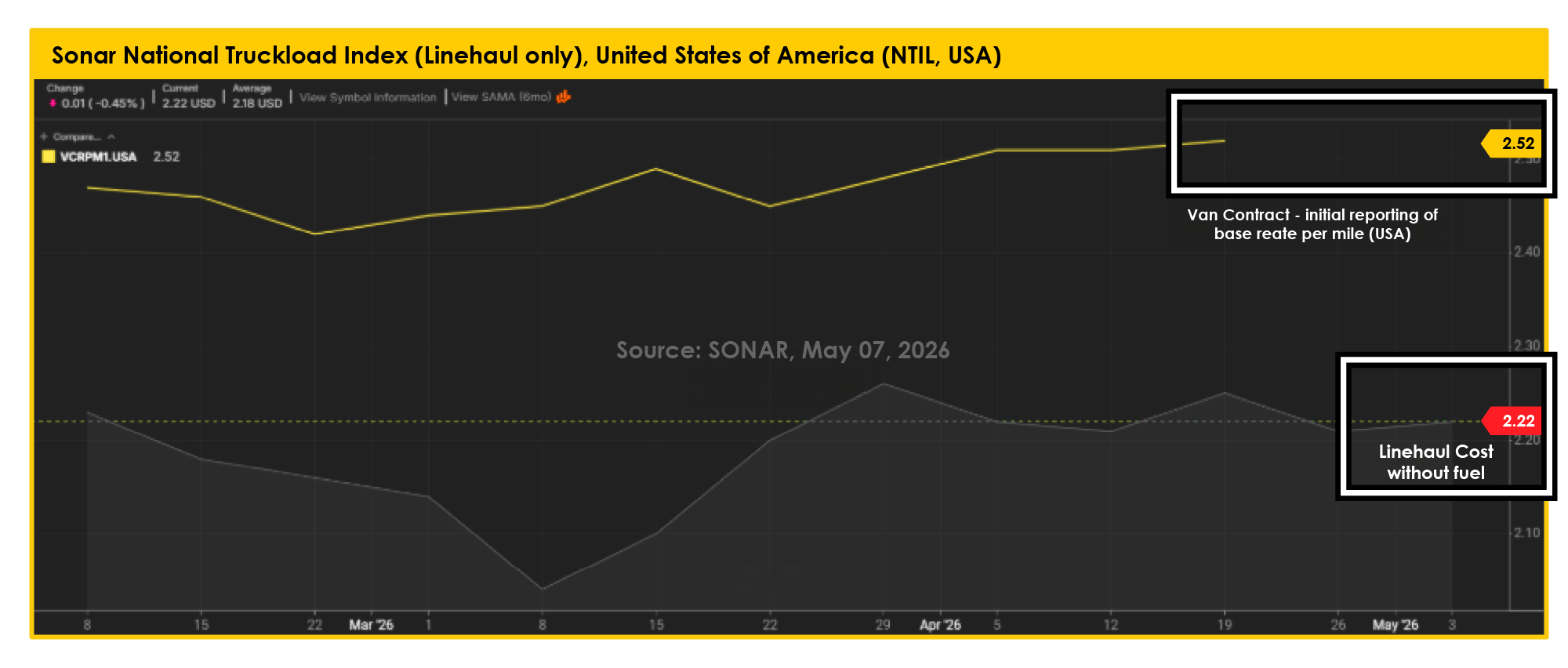
At the same time, contract rates continue to rise as carriers decline freight at previously agreed pricing. As more freight shifts into the spot market, higher pricing continues to reinforce overall transportation cost pressure. This is no longer a short term spike. It reflects a broader increase in the underlying cost of moving freight.
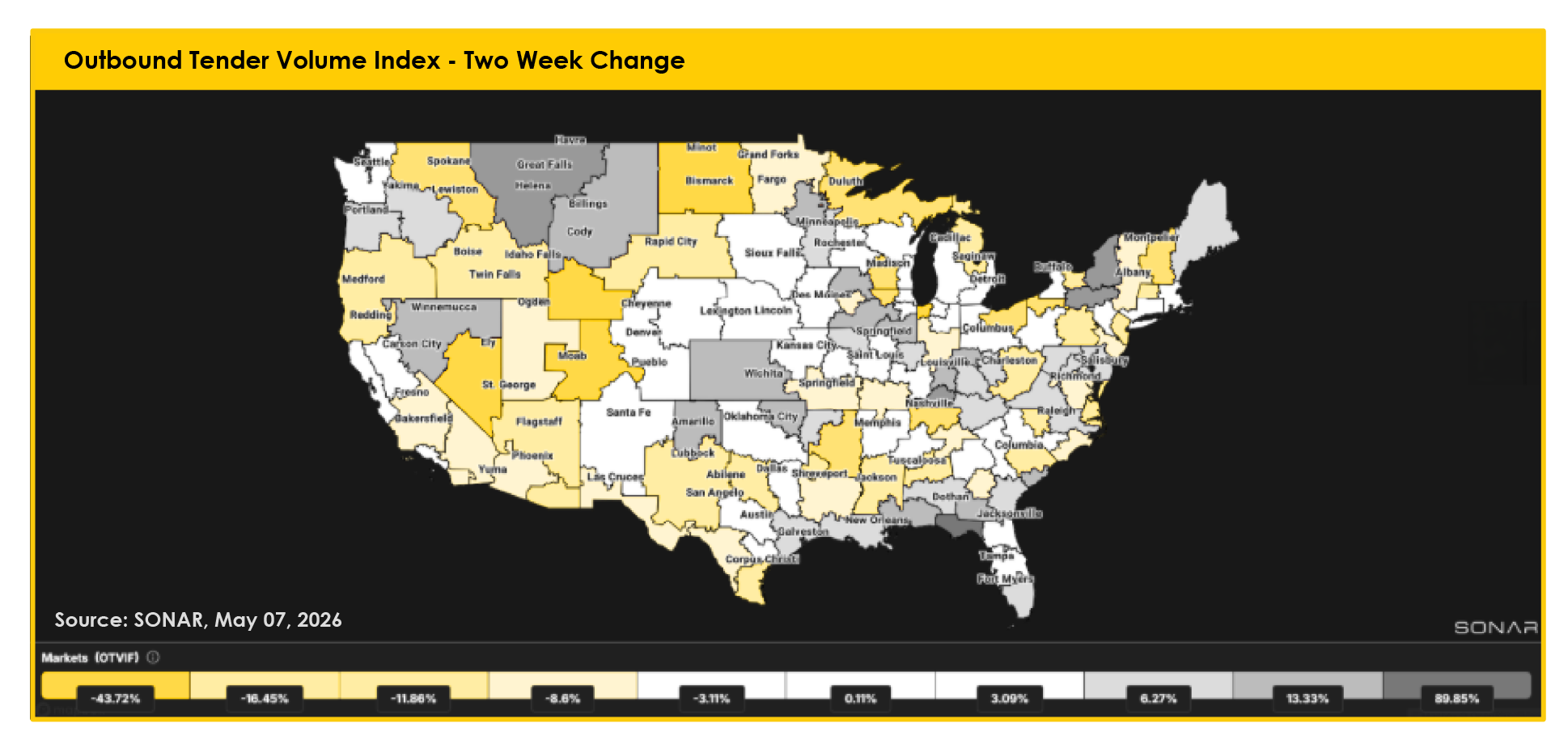
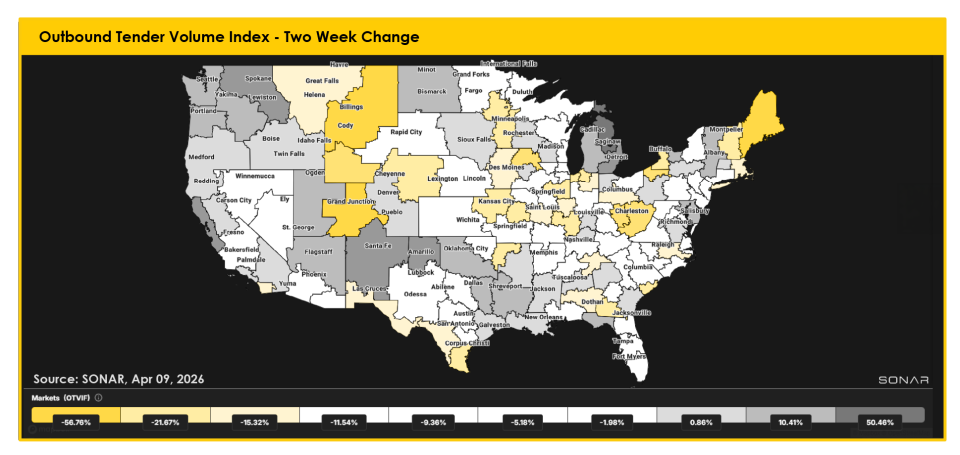
Freight demand also remains uneven across the country. Some markets are softening while others continue to tighten. Produce season is adding additional pressure across key lanes, as more trucks are pulled into produce heavy regions, reducing available capacity for other freight.
With DOT Week and Memorial Day approaching, the market has multiple near term catalysts that could tighten conditions even further.
For shippers, this means that small dips in volume should not be interpreted as rate relief. The market remains expensive, capacity remains selective, and pricing volatility could increase in the coming weeks.
Areas to Watch
Strategic Considerations
Market Overview
What This Means for the Market
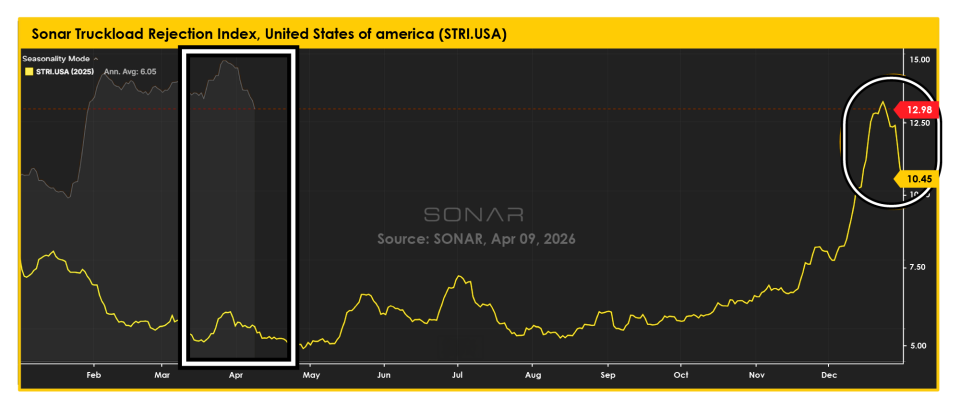
The market is showing some early signs of easing, but not enough to shift pricing.
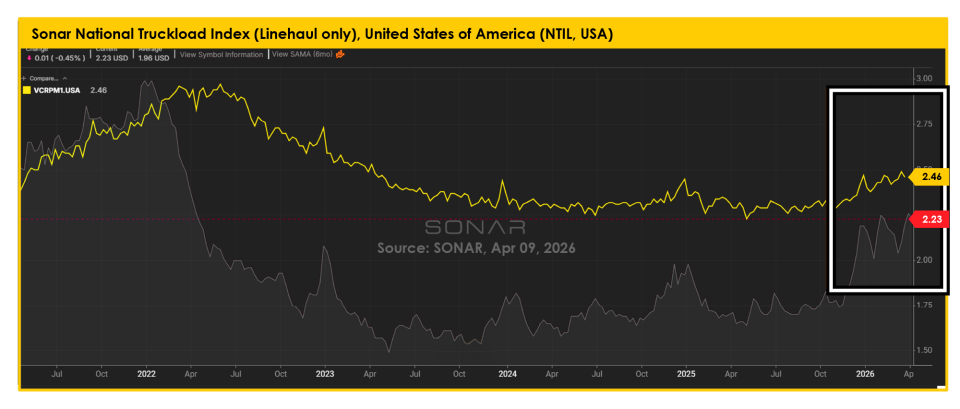
Even with a slight drop in volumes and fewer rejected loads, rates have not moved down. This reinforces that pricing is not being driven by fuel alone. The underlying cost of moving freight remains high, and carriers continue to hold the advantage.
Data trends support this. While rejection rates dipped slightly, they remain elevated overall. At the same time, both spot and contract rates are holding at multi-year highs, indicating that base freight pricing is sustaining current cost levels, not just fuel.
For shippers, this means that even when demand softens week to week, costs are not declining alongside it. Fuel is adding pressure, but it is not the primary reason rates remain elevated.
Areas to Watch
Strategic Considerations
Market Overview
What This Means for the Market
The market is heating up again. Demand is rising, carriers are rejecting more loads, and spot rates are climbing together – a clear sign that conditions are tightening, not easing. Carriers hold a leverage of choosing, making some contracted shipments harder to cover and increasing the risk of higher spot costs. At the same time, fuel is pushing up total shipping costs, not just surcharges, bringing spot and contract rates closer together. The takeaway: costs are rising, and opportunities to lock in lower rates are starting to narrow.
Areas to Watch
Strategic Considerations