Is Expedited Transportation Always More Expensive?
Read More
Published: October 19, 2026
Last Updated: October 19, 2026
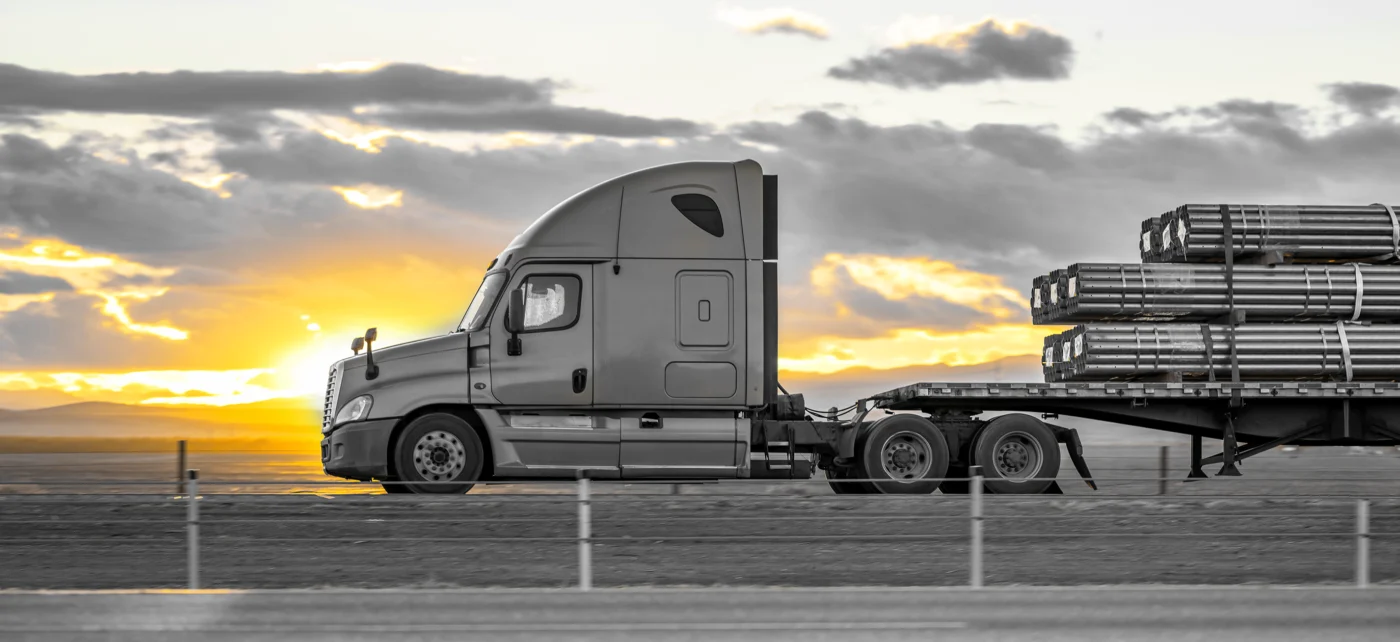
Flatbed transportation uses open-deck trailers to move freight that cannot fit inside enclosed equipment or needs to be loaded from the top or sides. From construction materials and structural steel to machinery and oversized equipment, flatbed transportation plays an important role in moving the freight that keeps construction, manufacturing, energy, infrastructure, and other industries running.
But shipping freight on an open deck comes with different considerations than shipping inside an enclosed trailer. The freight itself determines the equipment, loading method, securement, protection, and planning required to move it safely and efficiently.
Whether you’re new to flatbed shipping or looking to better understand your options, this guide covers the fundamentals. You’ll learn when flatbed transportation makes sense, how to choose the right equipment, how freight is prepared, loaded, secured, and protected, what can affect cost and delivery, and what to consider when planning your next shipment.
Flatbed transportation uses open-deck trailers with no fixed sides or roof, allowing freight to be loaded and unloaded from the top, sides, or rear. This makes it suitable for shipments that cannot fit through standard trailer doors or require cranes, forklifts, or other equipment to load and unload.
Flatbed transportation is not limited to a single trailer type. Standard flatbeds, step decks, double drops, and removable gooseneck (RGN) trailers are designed for different combinations of freight dimensions, weight, loading method, and clearance requirements.
Learn more about Flatbed Equipment Types, Specs, and Uses Here.
For example, a tall piece of machinery that would sit too high on a standard flatbed may be able to move on a step deck or double drop because the cargo sits closer to the road. Wheeled or tracked equipment may require an RGN so it can be driven directly onto the trailer. These differences are why equipment selection starts with understanding the freight and how it will be loaded and unloaded.
One of the biggest advantages of flatbed transportation is its flexibility. Because there are no fixed walls or roof, shippers have more options for loading, unloading, and accommodating freight that would be difficult or impossible to move in enclosed equipment.
That flexibility does not mean every open-deck trailer works for every shipment. Because every shipment has different requirements, successful flatbed transportation depends on matching the equipment to the freight and following established safety regulations throughout the move.
Flatbed transportation makes sense when freight cannot be safely or practically loaded, transported, or unloaded using enclosed equipment. The decision depends less on the industry and more on the freight itself and how it needs to be handled.
Common situations include freight that:
Size alone does not determine whether flatbed transportation is the right option. Two shipments with similar dimensions may require different equipment if one is loaded by crane and the other by forklift, or if one is delivered to a warehouse and the other directly to a construction site.
Understanding those requirements before selecting the trailer helps determine not only whether flatbed is needed, but which type of flatbed equipment can accommodate the shipment.
Key Takeaway: Before choosing a trailer, confirm the freight dimensions and weight, how it will be loaded and unloaded, and whether both locations can accommodate the equipment.
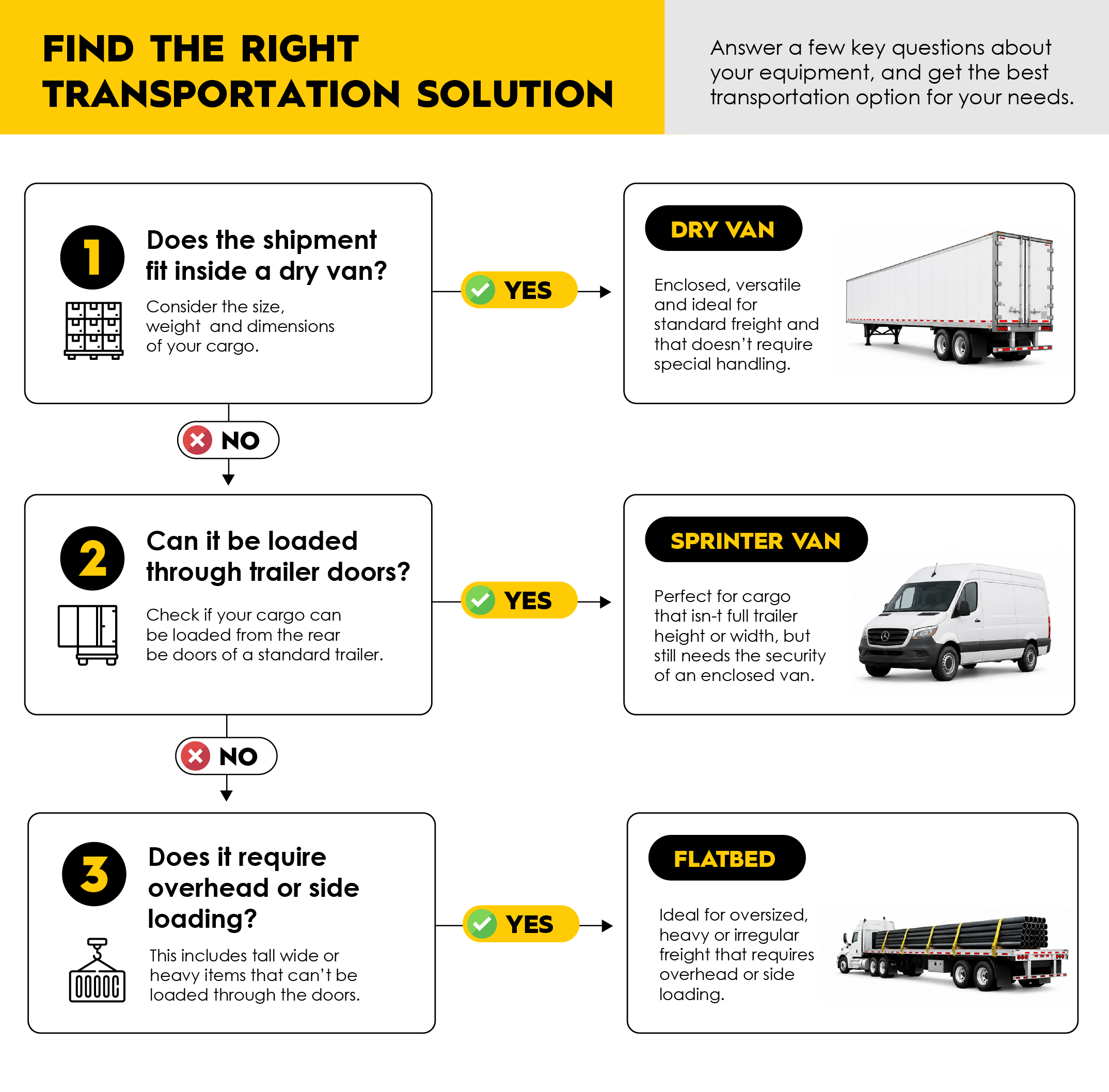
Choosing the right flatbed equipment starts with the freight’s dimensions, weight, loading method, and clearance requirements. The goal is to select a trailer that can accommodate the shipment while allowing it to be loaded, secured, transported, and unloaded as required.
The most common types of flatbed equipment include:
Standard Flatbed
A standard flatbed provides an open deck with no sidewalls or roof, allowing freight to be loaded from the top, sides, or rear. It is commonly used for steel products, lumber, building materials, machinery, and other freight that can travel within standard flatbed height requirements.
Step Deck
A step deck has a lower main deck than a standard flatbed, providing additional vertical clearance for taller freight. It is often used for industrial equipment, agricultural machinery, and other cargo that would sit too high on a standard flatbed.
Double Drop
A double drop provides an even lower center deck, creating additional clearance for exceptionally tall freight. Depending on the shipment, this can accommodate cargo that cannot move on a standard flatbed or step deck.
Removable Gooseneck (RGN)
An RGN allows the front of the trailer to detach and lower to the ground, creating a ramp for wheeled or tracked equipment. This makes it possible to drive construction equipment, agricultural machinery, and other self-propelled cargo directly onto the trailer.
Dimensions are not the only factor in equipment selection. Cargo weight, center of gravity, loading method, securement requirements, and accessibility at the pickup and delivery locations can change which trailer is appropriate, even for shipments with similar dimensions.
Learn more about the different flatbed trailer types, dimensions, and applications in our complete equipment guide.
An accurate flatbed quote depends on having complete information about the freight and how it will be loaded, transported, and delivered. Before requesting a quote, shippers should be prepared to provide:
Photos, drawings, equipment specifications, or other supporting documents can also be helpful for machinery, irregularly shaped freight, or shipments with unusual loading requirements.
Accurate information matters because seemingly small details can change the equipment and transportation plan. A difference in cargo height could require a lower-deck trailer, while an incorrect weight, loading method, or site restriction could mean the equipment originally quoted will not work for the shipment.
Providing complete information upfront helps ensure the quote reflects how the freight will actually need to move, reducing the likelihood of equipment changes, delays, or unexpected costs later.
Flatbed trailers can be loaded and unloaded from the top, sides, or rear depending on the freight, available equipment, and site conditions. The loading method can also affect which type of trailer is needed.
The most common loading and unloading methods include:
The loading method needs to work at both ends of the shipment. A facility may have the crane needed to load a piece of machinery, for example, while the delivery location may require a different unloading plan. If the required equipment is not available when the truck arrives, the shipment may need to wait, be rescheduled, or incur detention.
Key Takeaway: Don’t plan only for how the freight gets onto the trailer. Confirm how it will come off at destination before pickup.
Weight distribution affects how a flatbed shipment can be loaded and whether the trailer remains within applicable axle weight limits. Even when the total shipment weight is within the trailer capacity, concentrating too much weight over one axle can create an overweight condition.
Heavy or unevenly shaped freight may need to be positioned differently across the deck to distribute weight appropriately. The freight’s center of gravity can also affect where it is placed and how it is secured, particularly with machinery, equipment, or other loads where weight is not evenly distributed.
Poor weight distribution can lead to axle weight violations, reloading, reweigh fees, delays, or even an equipment change if the original trailer cannot accommodate the load as planned. In some cases, the freight may need to be repositioned before the shipment can continue.
A flatbed shipment becomes oversized or overweight when its dimensions or weight exceed the legal limits that apply along its route. Because limits and operating requirements can vary between jurisdictions, determining whether a shipment requires additional planning involves more than comparing the freight against a single set of measurements.
Depending on the size, weight, and route, an oversize or overweight shipment may require permits, specific travel routes, escort vehicles, travel during certain hours, or additional planning around bridges, overhead clearances, construction zones, and other roadway restrictions.
The trailer selected can also make a difference. Moving taller freight on a step deck or double drop lowers the cargo relative to a standard flatbed and may change the overall loaded height.
This is why exact dimensions and weights should be confirmed early. Once the shipment requirements are known, the route, equipment, permits, and operating restrictions can be evaluated before pickup rather than after the freight has already been loaded.
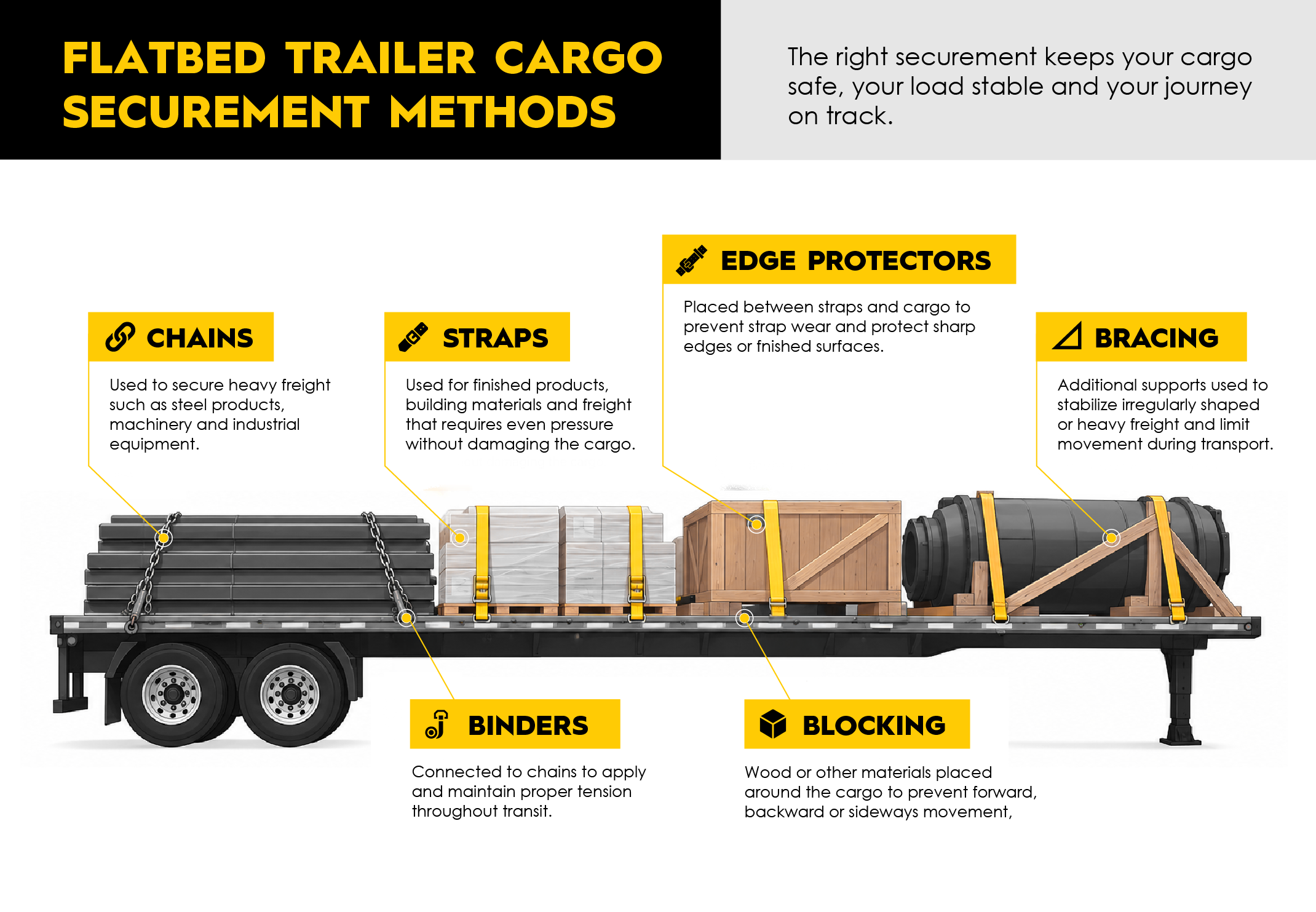
Proper cargo securement is one of the most important aspects of flatbed transportation. Freight is exposed to acceleration, braking, cornering, road vibration, and changing weather conditions throughout the journey. Without the right securement methods, cargo can shift during transit, increasing the risk of product damage, safety incidents, delays, or regulatory violations.
The appropriate securement method depends on the cargo’s size, weight, shape, and surface characteristics. Most flatbed shipments use a combination of securement devices rather than relying on a single method. Common securement methods include:
Every shipment requires a securement plan based on the characteristics of the freight rather than a one-size-fits-all approach. Selecting the appropriate securement methods helps maintain load stability, protect the cargo, and support compliance with established safety regulations throughout the move.
Not all flatbed freight requires weather protection. Materials such as structural steel, certain construction products, and some types of equipment may be able to travel exposed, while other shipments need protection from rain, moisture, road debris, or other environmental conditions.
When protection is required, tarps are commonly used to cover the freight during transit. The type and amount of coverage depend on the cargo, its dimensions, and the level of protection required. Some machinery or equipment may only need specific components covered, while other freight may require full coverage.
Carriers may charge an additional fee for tarping because it adds both equipment and labor to the shipment. Flatbed tarps can be large and heavy, and properly positioning, securing, and removing them can add significant time to the loading and unloading process, particularly for large or irregularly shaped freight.
Weather protection requirements should be identified before pickup because they can affect the equipment and preparation needed for the shipment. For example, a load that requires full tarping may require appropriately sized tarps and additional time at pickup to cover and secure the freight before departure.
There is no single flatbed shipping rate because the cost depends on the requirements of the individual shipment. Distance and market conditions matter, but the freight itself can have just as much influence on the final transportation cost.
Common factors that can affect a flatbed rate include:
A load that moves on standard equipment with straightforward loading and unloading requirements will generally have fewer cost components than a shipment requiring specialized equipment, permits, escorts, tarping, or additional handling.
Rather than comparing flatbed quotes on the transportation rate alone, shippers should understand what equipment and services are included and whether the proposed transportation plan meets the requirements of the freight.
The transportation rate is not always the only cost associated with a flatbed shipment. Additional charges, often called accessorials, may apply when a shipment requires extra equipment, labor, time, or services beyond the standard transportation of the load.
Common flatbed accessorials can include:
Accessorial charges are often tied to the specific requirements of the shipment or circumstances at pickup and delivery. Providing accurate freight information, confirming site requirements, and understanding loading and unloading expectations before booking can help identify many of these potential costs in advance.
When comparing flatbed quotes, shippers should ask what is included in the quoted rate and which services or circumstances could result in additional charges. This makes it easier to compare the total expected cost of the shipment rather than the transportation rate alone.
Many flatbed shipments are delivered somewhere very different from a traditional warehouse dock. Construction sites, infrastructure projects, manufacturing facilities, energy projects, and other locations may have limited access, uneven ground, restricted maneuvering space, or specific requirements for unloading.
Before delivery, shippers should confirm:
The unloading method should be considered when the shipment is first planned, not when the truck reaches its destination. A piece of machinery may be easy to crane onto a trailer at origin but difficult to unload if the receiving site does not have equivalent lifting equipment.
Confirming site conditions and unloading requirements before pickup helps prevent situations where a truck arrives but cannot access the site, position the trailer, or unload the freight as planned.
Many flatbed transportation challenges come from shipment details that affect equipment, loading, or routing. Some of the most common include:
Not every challenge can be eliminated, but many can be prevented by confirming shipment information and operational requirements before equipment is dispatched.
Flatbed transportation is subject to regulations covering areas such as vehicle weight and dimensions, cargo securement, equipment condition, and oversize or overweight movements. The specific requirements depend on the freight, equipment, route, and jurisdictions through which the shipment travels.
Cargo securement rules establish how freight must be restrained during transportation and can include requirements related to the number, type, placement, and strength of securement devices. Certain commodities may also have specific securement requirements.
When a shipment exceeds standard legal dimensions or weight limits, additional requirements may apply. Depending on the jurisdiction and shipment, these can include permits, approved routes, escort vehicles, travel-hour restrictions, signage, or other operating requirements.
For cross-border or long-distance shipments, requirements may change as the truck moves between states, provinces, or countries. Identifying the route and shipment specifications early allows these requirements to be addressed before transportation begins.
Shippers do not need to become experts in every flatbed regulation, but they should provide accurate freight information and understand when a shipment may require additional regulatory planning.
Flatbed transportation providers do more than find an available truck. Specialized shipments may require decisions about equipment, loading methods, cargo securement, permits, routing, weather protection, and delivery coordination before the freight can move.
When evaluating a transportation provider, consider whether they can:
The right level of support depends on the shipment. A straightforward standard flatbed load may require relatively little coordination, while oversized machinery moving to an active jobsite may require considerably more planning. The important question is whether the provider has the capabilities and experience required for the specific freight being moved.
Flatbed transportation provides the flexibility to move freight that cannot be handled efficiently with enclosed equipment, but that flexibility makes accurate shipment information and early planning especially important.
Start with the freight: know its exact dimensions and weight, how it will be loaded and unloaded, whether it needs protection, and what conditions exist at pickup and delivery. Those details help determine the equipment, securement, routing, permits, and coordination required for the move.
When those requirements are understood before pickup, shippers are better positioned to avoid preventable equipment changes, delays, rehandling, and added costs while moving specialized freight safely and efficiently.
Flatbed transportation is a freight shipping method that uses an open-deck trailer to transport cargo that cannot fit inside an enclosed trailer or requires loading from the side or above. It is commonly used for construction materials, industrial equipment, machinery, steel products, and oversized freight.
An enclosed trailer has fixed walls and a roof and is generally loaded through trailer doors. A flatbed has an open deck, allowing cargo to be loaded from the sides, rear, or above using cranes, forklifts, or other equipment.
Common examples include structural steel, lumber, building materials, concrete products, heavy machinery, industrial equipment, agricultural equipment, prefabricated components, and oversized or irregularly shaped freight.
Capacity depends on the specific tractor, trailer, freight placement, and applicable regulations. Total shipment weight is only part of the calculation because axle weights and weight distribution also determine whether a load can move legally and safely.
Dimensions vary by trailer type and equipment configuration. Standard flatbeds, step decks, double drops, and RGNs have different deck heights and usable deck areas, which is why exact freight dimensions should be provided before equipment is selected.
It can be, but the comparison depends on the shipment and market. Trailer type, dimensions, weight, lane, capacity, tarping, permits, escorts, handling requirements, and loading or unloading time can all affect the rate.
Yes. Palletized freight can move on flatbed equipment when an open deck is appropriate for the product, loading method, dimensions, or delivery requirements. The freight still needs appropriate securement and weather protection when required.
Not every shipment requires a tarp. Whether cargo needs weather protection depends on the material being transported, customer requirements, and expected environmental exposure during transit.