The Hidden Costs of Choosing the Lowest Cost LTL Carrier
Read More
Published: September 21, 2023
Last Updated: June 1, 2026

Less-than-Truckload (LTL) transportation is an integral part of the modern supply chain, offering businesses a flexible and cost-effective solution for transporting goods in volumes that do not require a full truckload.
While LTL offers flexibility and cost efficiency, it operates through a network of terminals and transfer points. Understanding how that network functions in practice helps shippers better manage transit time, cost, and freight conditions.
This article will provide a comprehensive understanding of LTL transportation, including its benefits, how it works, and recommended best practices.
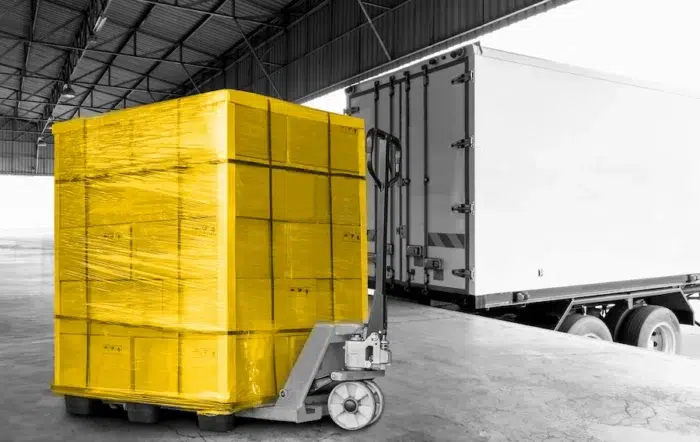
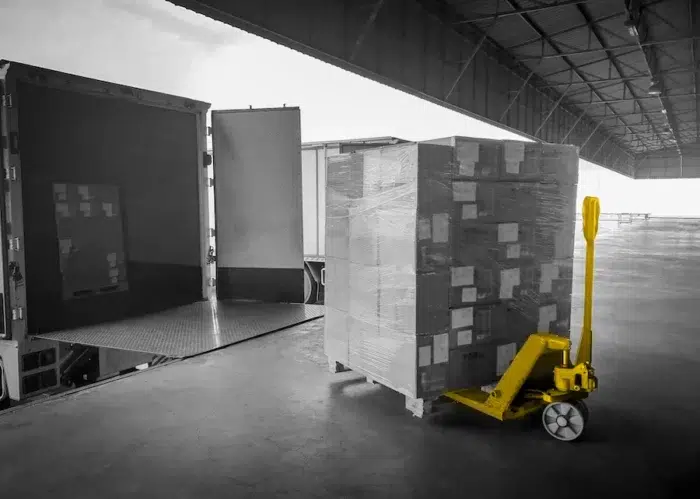
LTL Transportation involves collecting small shipments from multiple shippers and combining them onto one truck. Each shipper is charged only for the space their freight takes up in the trailer.
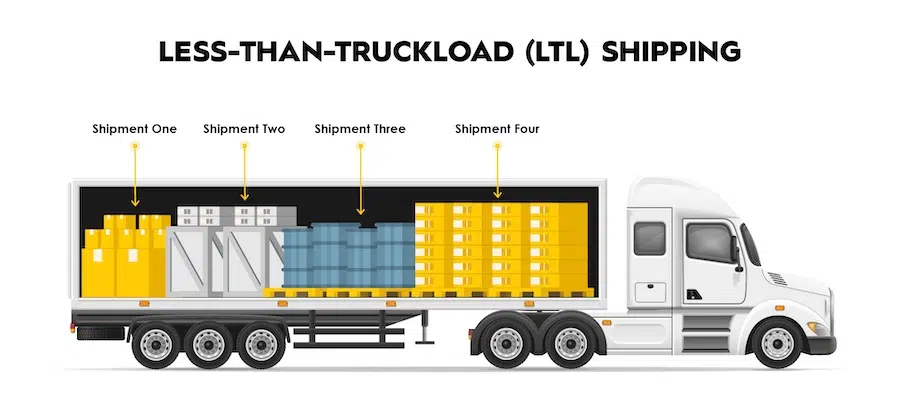
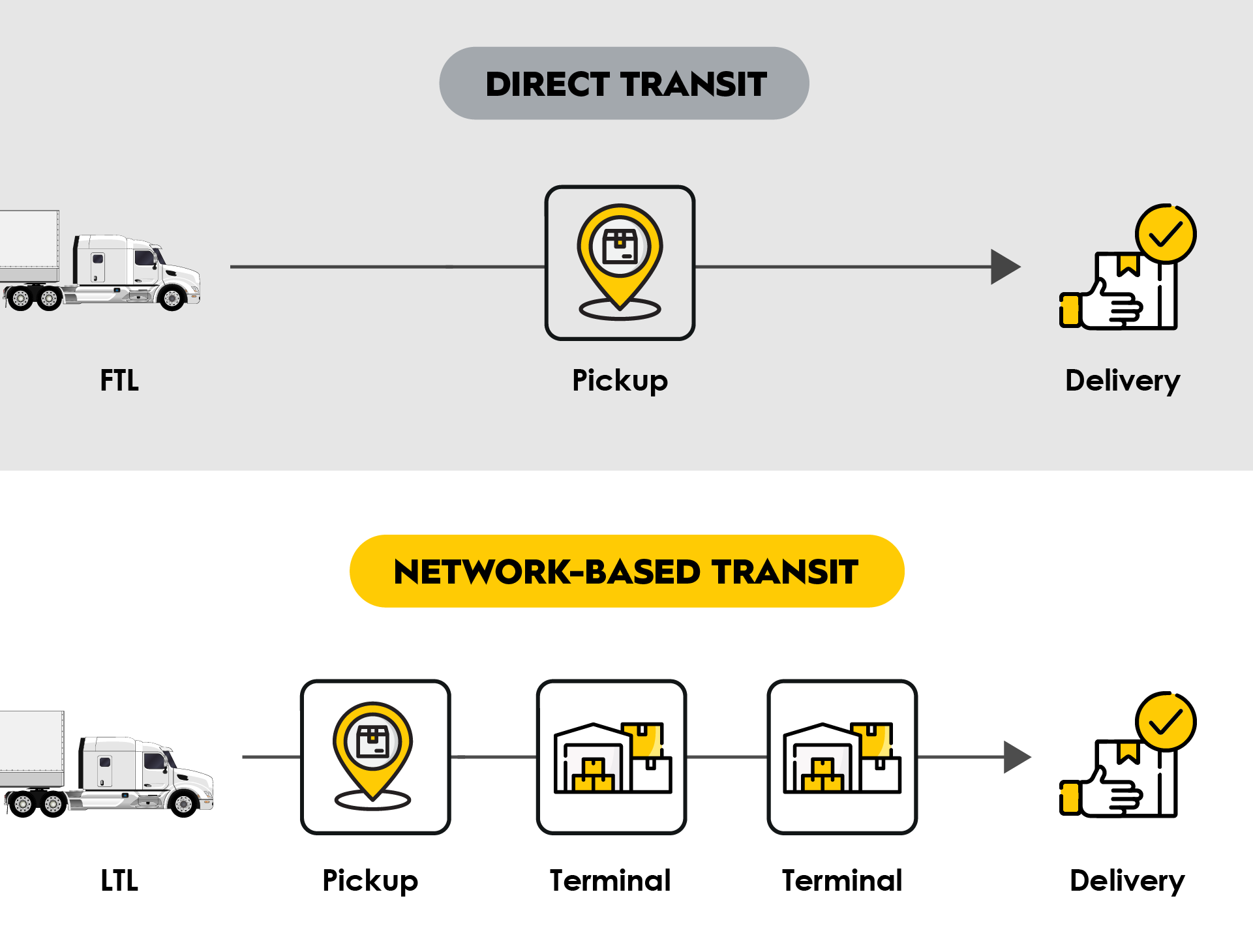
Unlike full truckload shipping, where freight moves directly from origin to destination, LTL shipments move through a network of terminals where freight is consolidated, sorted, and transferred.
This structure allows multiple shipments to share trailer space, but it also introduces additional variables that can impact performance:
LTL shipping operates differently than truckload freight. It is a network-based service where every stage of the freight’s movement impacts transit time, cost, and cargo condition.
1. Cost Savings: LTL transportation enables businesses to pay only for the space they use in a trailer, making it a cost-effective solution compared to full truckload shipping and an excellent solution for small and e-commerce businesses.
2. More efficient supply chains and increased customer satisfaction: Without LTL transportation, shippers would need to either wait until they had enough freight to fill a truck or incorporate the cost of a full truckload into the price of smaller orders.
LTL transportation allows shippers to deliver small orders quickly and cost-effectively, increasing customer satisfaction.
3. Environmentally Sustainable: As shippers can avoid moving small shipments via truckload service, LTL transportation consolidates many small shipments onto one truck, thus leading to fewer emissions and a smaller carbon footprint.
LTL shipments usually fit within the following parameters:
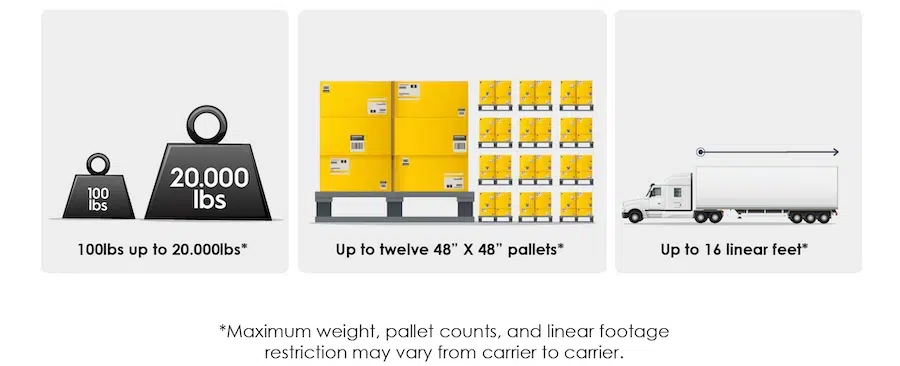
A 53’ trailer is segmented into twenty-six 48” x 48” pallet positions or skid spots. This means that a 53’ trailer can accommodate up to 26 pallets with a 48” x 48” footprint.
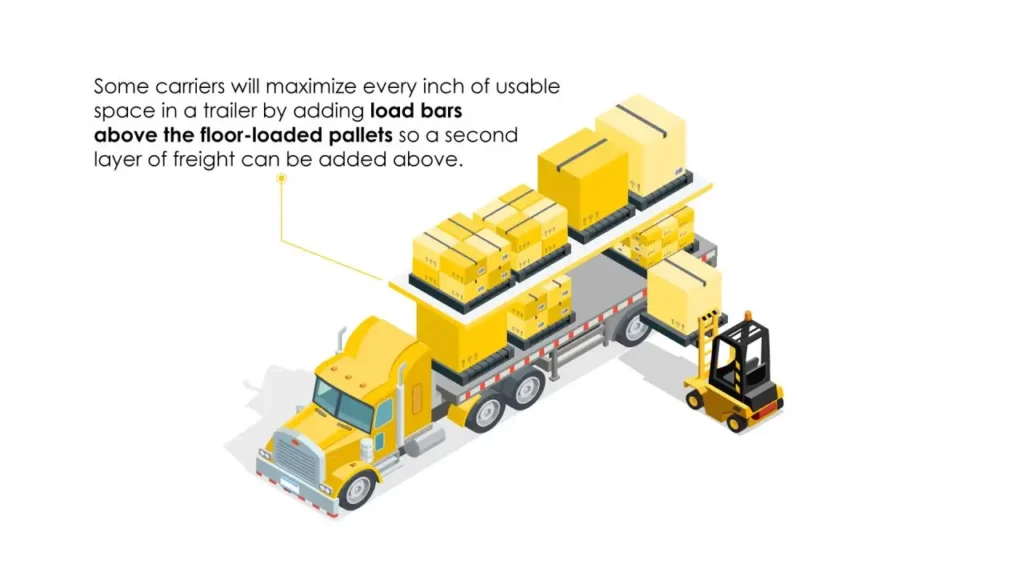
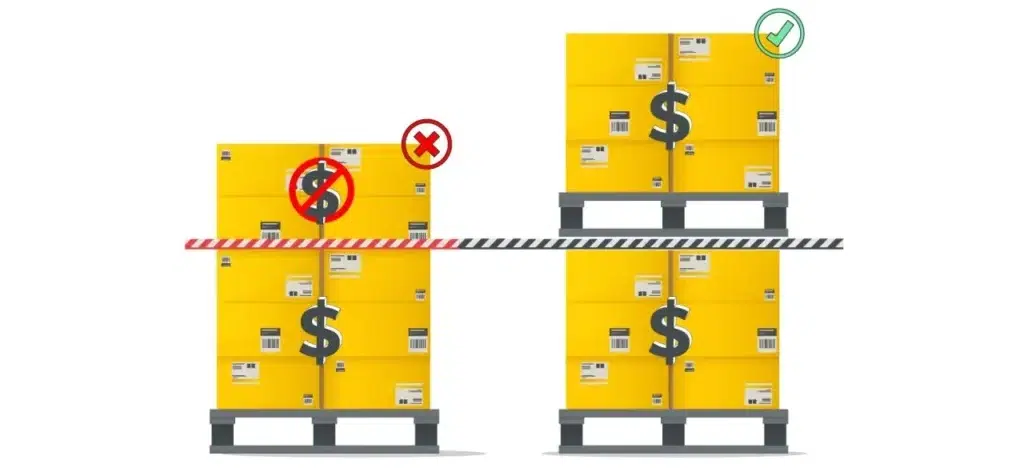
When a pallet is too tall for more freight to be loaded above it, some carriers will consider that pallet to be taking up two pallet positions.
For this reason, many LTL carriers will charge a premium for tall pallets that exceed a certain height.
Typically, LTL carriers allow pallets to reach up to 72” in height before a surcharge is applied. Skids must not exceed 84” in height, as this is the maximum height a pallet can be before it is too tall to fit on a straight truck, which is typically used for local pickups and deliveries.
Direct LTL service is a less common way to ship LTL freight and is more commonly done in Canada. Direct LTL service involves a truckload carrier picking up multiple small shipments within a close geographic area until their truck is full.
The truck then drives to the destination, and delivers each shipment to receivers within another close geographic area, typically in the order the freight was loaded.
Using this method of LTL transportation, the first pallets loaded onto the truck are usually the last to be delivered (First-On-Last-Off).
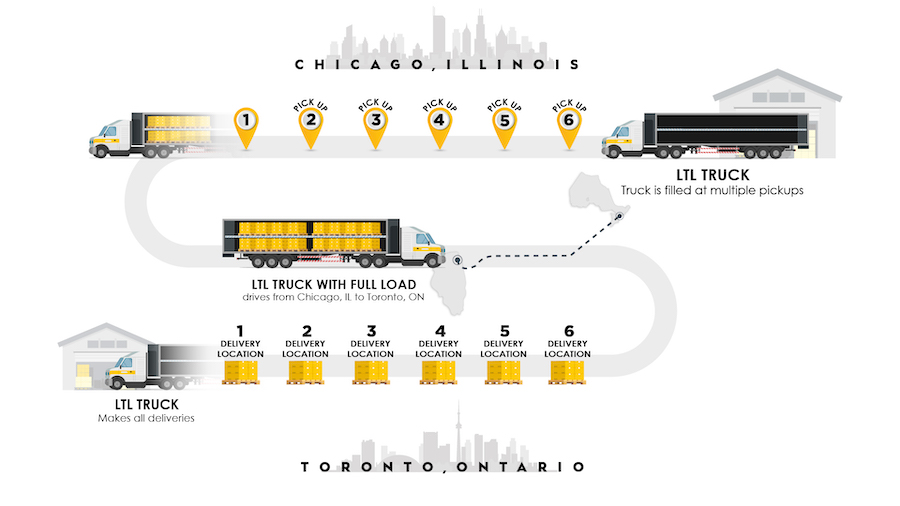
Direct LTL service is better suited for larger LTL shipments, as the bulk of the cost is in the pickup. With larger loads, that cost is amortized over more freight, making the overall shipment less expensive to move.
In contrast, smaller shipments can be more costly via direct LTL.
Since Direct LTL service is provided using one truck and one driver, shippers can expect better communication, visibility, and transit times. Because freight is delivered in the order it is loaded, there is no cross-docking, which helps reduce the risk of damages and losses.
However, direct LTL also comes with a major disadvantage: capacity. Direct LTL carriers are less common, meaning availability is more limited across geographic areas compared to traditional LTL hub-and-spoke networks.
Hub and Spoke systems involve local carriers gathering shipments from multiple shippers within a close geographic area. This is the most common method used to ship LTL freight.
Once a trailer is full, the carrier delivers the freight to an LTL distribution hub (or terminal). LTL carriers typically use straight trucks for these local pickups and deliveries.
LTL shipments are sorted and grouped at the distribution hub based on the distribution hub they are destined for next. When enough freight has been collected to fill a truck, it is loaded onto a highway truck and line-hauled to the next hub.
When the freight arrives at its distribution hub, it is again sorted and grouped based on where it is going next. Some freight may be headed to another distribution hub, while other loads may be directed to its final delivery.
Freight headed to its final delivery is sorted and grouped by destinations within a close geographic area. A local carrier will pick up the freight and deliver it to each final receiver.
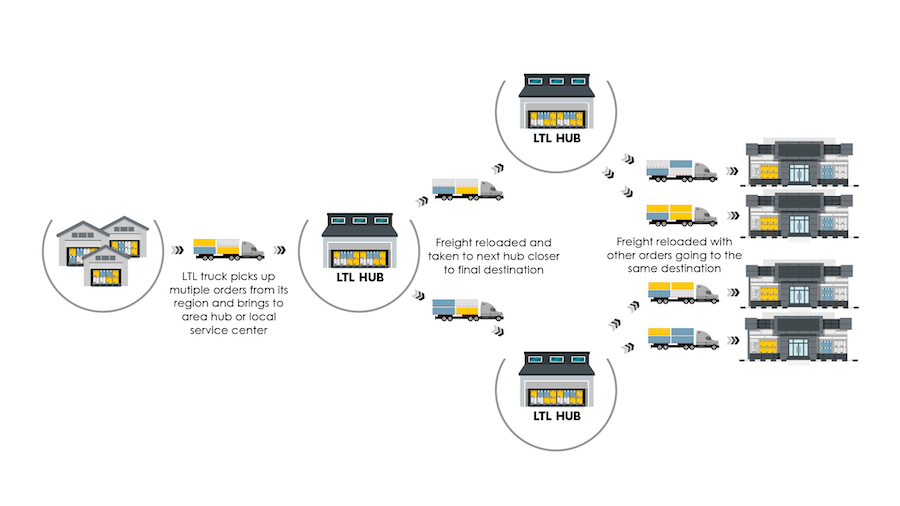
Shipping LTL freight via a common carrier using the hub-and-spoke network has advantages and disadvantages:
Transit time in LTL shipping is influenced by more than distance. Because shipments move through a network, timing depends on how efficiently freight flows between terminals.
Key factors that impact transit time include:
Unlike truckload shipping, where transit is direct between points, LTL requires planning around estimated delivery windows rather than exact delivery times.
Understanding this variability helps shippers build more accurate expectations and reduce disruption in their supply chain.
LTL Shipments are priced using one of three models:
While the pallet and weight pricing models are relatively straightforward, density and cube pricing is more complex and influenced by several additional factors:
Because of this pricing structure, incomplete or inaccurate shipment information can lead to unexpected charges after delivery.
In a traditional hub-and-spoke network, LTL shipments are subject to frequent handling. At each terminal, freight is unloaded, sorted, and reloaded as it moves through the network.
Each touchpoint introduces potential risk, particularly for losses and damages. Certain types of freight are more vulnerable to frequent handling such as:
LTL transportation requires packaging that can withstand multiple handling events and is essential to reducing damage risk and maintaining shipment integrity.
Choosing between LTL and truckload depends on shipment size, urgency, and cost priorities.
LTL is best suited for:
Truckload may be more appropriate for:
As pallet counts increase, the cost advantages of LTL can begin to diminish. In these situations, partial truckload, full truckload (FTL), or expedited shipping may become more efficient options, particularly when direct transit, reduced handling, or faster delivery is required.
Understanding these differences helps shippers select the right mode for each move and balance cost with service requirements.
When shipping LTL freight, there are several things you can do to ensure accurate pricing, optimal transit time, and overall satisfaction:
For example, suppose upon delivery, the consignee informs the delivery driver that a liftgate and inside delivery services are required to receive their freight. In that case, the driver will oblige, and fees will be applied regardless of if they were ordered. Knowing these details upfront will help you avoid surprise charges.
If, for example, one shipment on an LTL carrier’s truck does not have proper customs paperwork or causes border patrol to conduct an inspection, it will delay every shipment on the trailer. The load that causes those delays will be responsible for paying all fees and fines associated with the delay.
Suppose you have mission-critical freight that must be delivered on time to avoid costly consequences. In that case, we recommend exploring expedited transportation services that will move your fright through traditional channels quicker based on its urgency.
LTL transportation depends on coordination across a network of terminals, carriers, and processes. Each decision, from packaging and classification to scheduling and routing, affects how efficiently freight moves through that network.
While cost efficiency is one of the primary advantages of LTL, achieving it consistently requires more than simply booking available capacity. Accurate shipment data, proper NMFC classification, accessorial management, and strategic carrier selection all play a major role in controlling costs and avoiding delays or unexpected charges.
Experienced providers also help optimize routing, match freight with the right carriers, manage service expectations, and maintain visibility throughout transit. This level of coordination helps ensure shipments move efficiently and consistently across every stage of the journey.
To learn more about LTL transportation, contact us today!
Less-than-truckload (LTL) shipping is a transportation method where multiple shipments from different shippers share space on the same truck. It is used for freight that does not require a full trailer.
Transit time in LTL shipping depends on distance, routing, and the number of terminal transfers. Because shipments move through a network, delivery timelines are typically estimated rather than guaranteed.
Freight class (NMFC) is a standardized system used to categorize shipments based on density, handling, stowability, and liability. It plays a key role in determining LTL pricing.
LTL shipping consolidates multiple shipments into one truck, making it more cost-efficient but less direct. Truckload shipping uses a dedicated trailer, offering faster and more predictable transit.
LTL is best for smaller shipments that do not fill a full trailer and when delivery timing is flexible. FTL is more suitable for larger, time-sensitive, or high-value shipments.
Because LTL shipments are handled multiple times across terminals, they may carry a higher risk of damage compared to truckload. Proper packaging and palletization are critical to reducing this risk.
Common accessorial services include liftgate delivery, residential delivery, appointment scheduling, and inside delivery. These services can impact both cost and transit time.