




TRAFFIX Trends Q3 2025
Read More
Published: April 16, 2026
Last Updated: July 13, 2026
The North American freight market is entering the next phase of its recurring cycle. Following the high rates seen during the COVID pandemic, freight rates remained stable at lower levels for over three years. We’re seeing the end of that phase.
Less Capacity
A meaningful amount of truckload capacity exited the market during the prolonged low-rate environment. Continued regulatory enforcement, including English-language requirements and non-domiciled CDL scrutiny, is further constraining available drivers.
More Freight
Freight volumes are back in growth mode. Lean inventories and stronger ordering are driving demand, while tighter carrier capacity is pushing rates upward.
Rising Diesel Costs
Diesel prices have increased sharply in recent months, with costs up ~50% since early Q1. These increases are flowing through to transportation rates, with minimal lag, amplifying an already tightening market.
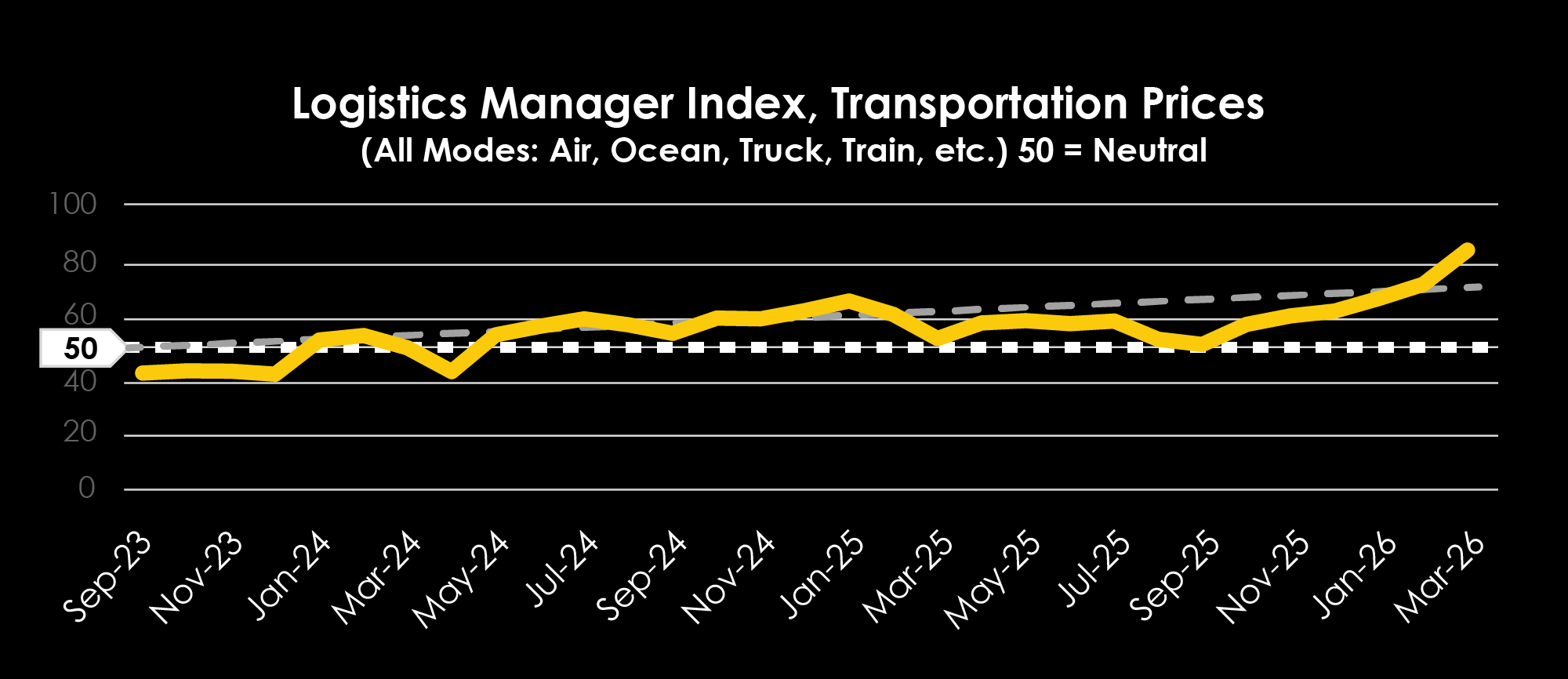
The Transportation Price Index from the Logistics Managers’ Index (LMI) has surged to its highest level since 2022, while the capacity index has dropped below 40. This widening gap reflects a rapidly tightening freight environment, with pricing power shifting back to carriers.
Source: LMI
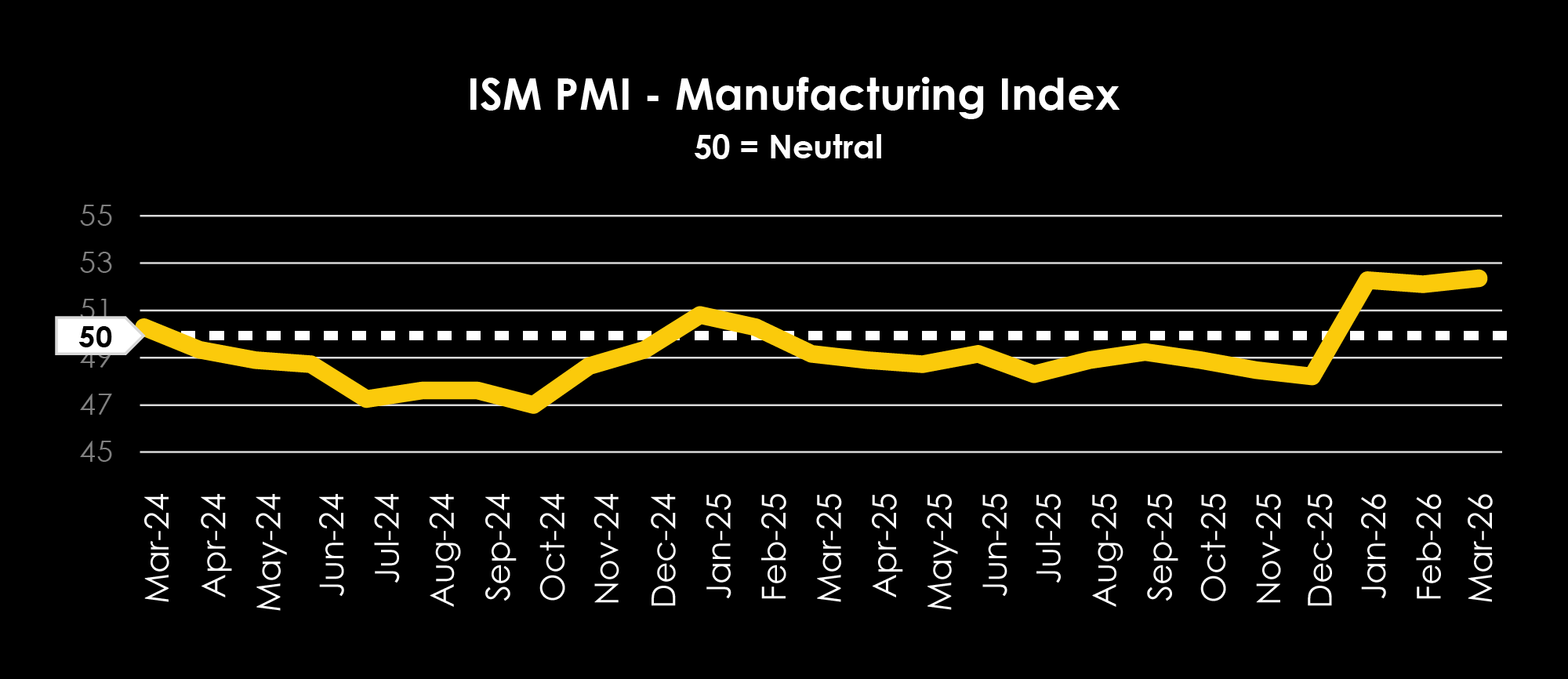
U.S. manufacturing has returned to expansion territory for multiple consecutive months. New orders, production growth, and imports are contributing to increased freight demand, while inventory levels remain relatively lean.
Source: PMI

Capacity remains tight near-term, with only gradual recovery expected
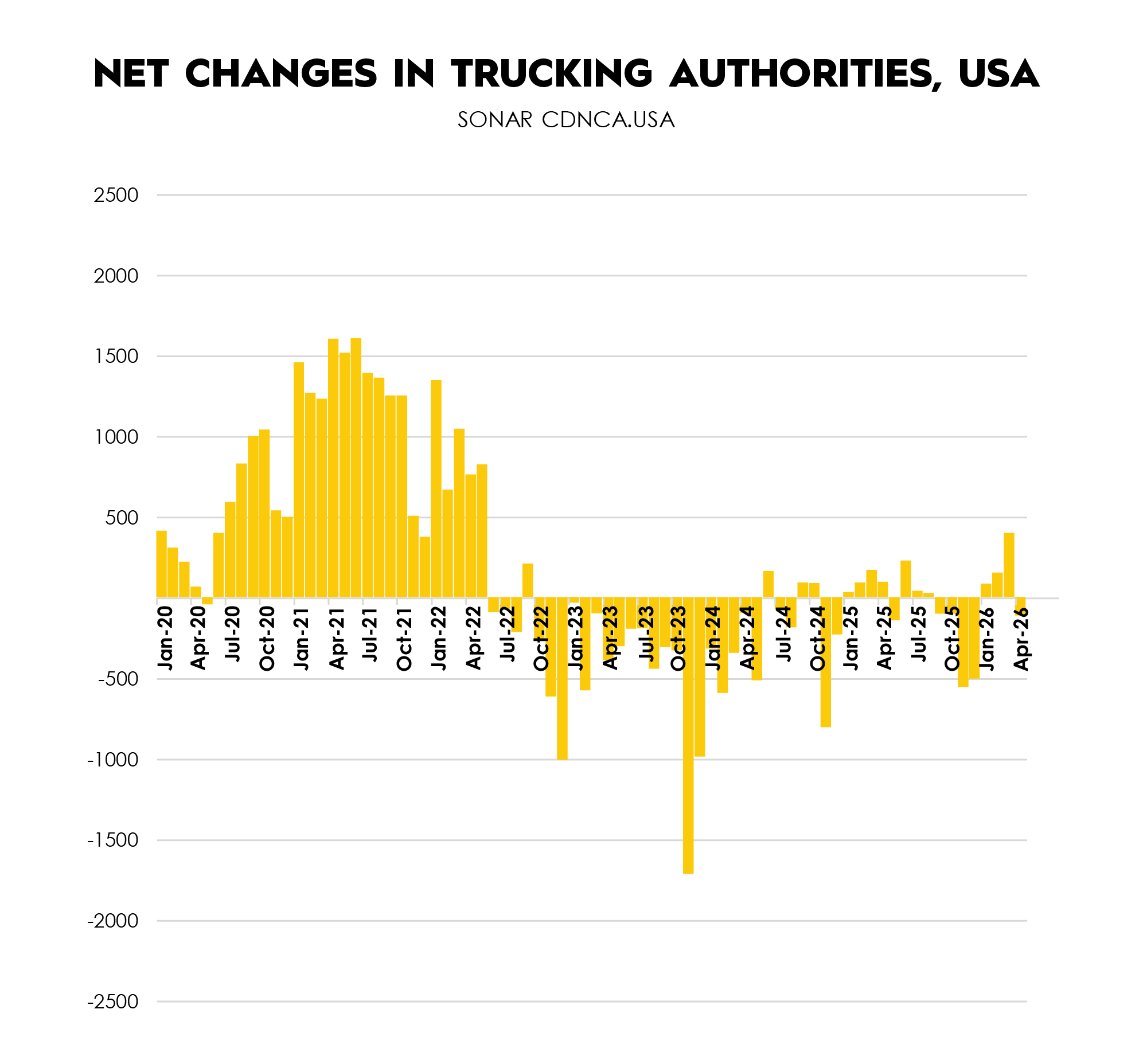
Q1 showed modest growth in U.S. trucking authorities, but levels remain below historical averages. Despite some re-entry, capacity is still insufficient relative to current demand.
Tender rejection rates have remained above 10% for over two months, reinforcing a structurally tight market. While higher rates should attract new capacity, this process will take time.
Regulatory enforcement continues to limit effective capacity, including English-language requirements and increased scrutiny of non-domiciled drivers.
Although Class 8 truck orders were strong in Q1, much of this reflects fleet replacement rather than true expansion.
Capacity is improving slowly but will likely remain tight through peak season.
Source: FreightWaves SONAR – Apr 13, 2026; Class 8 Orders
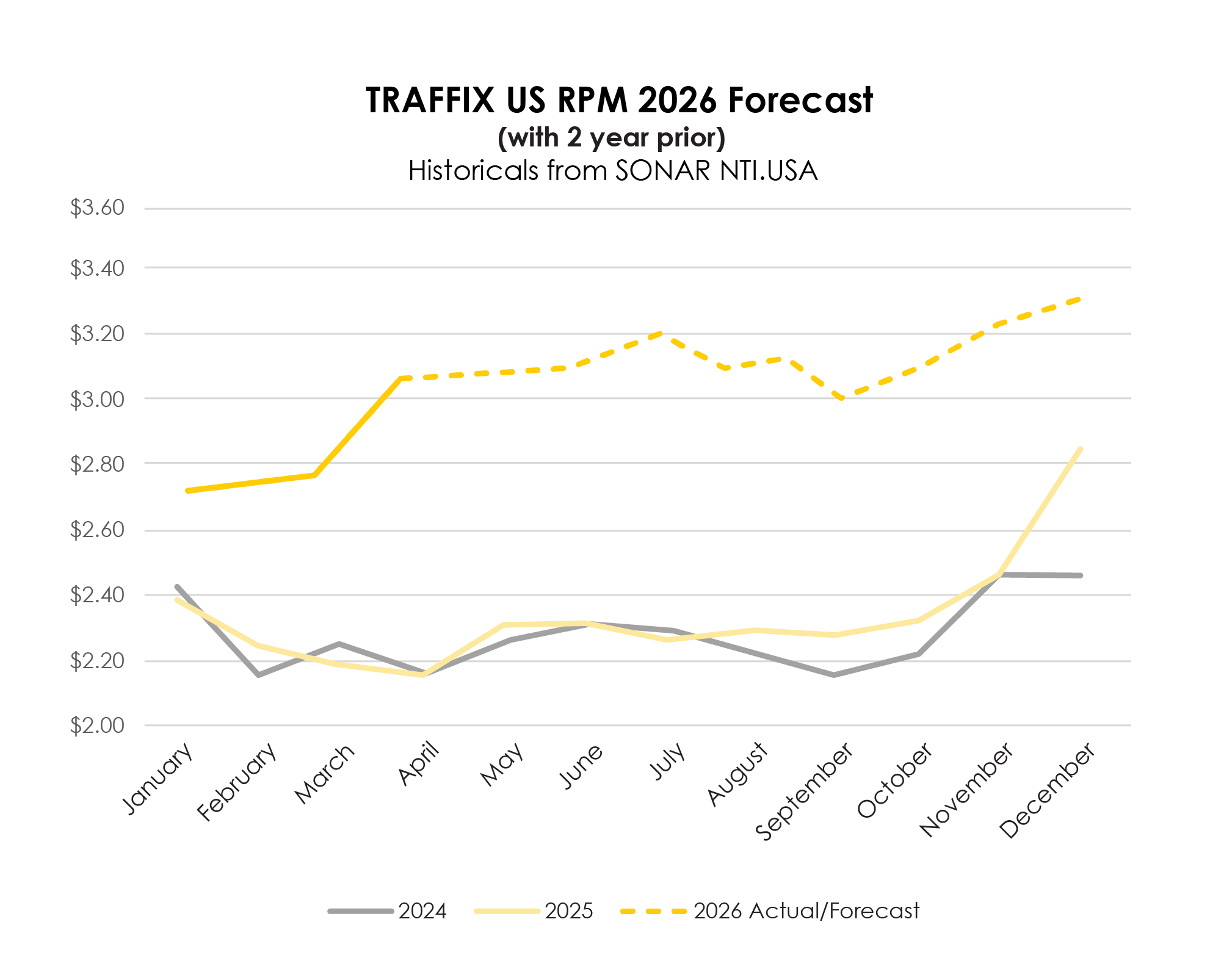
(A/F = Actual / Forcasted)
Source: FreightWaves SONAR – Apr 13, 2026


Dry van rates are expected to remain elevated through mid-2026, supported by strong freight demand and tight capacity. Contract rate increases will continue as shippers adjust to sustained spot market pressure.

LTL pricing is expected to remain stable to moderately higher, supported by carrier discipline and improving demand. Limited capacity growth should sustain pricing strength.

Flatbed markets are tightening rapidly due to construction, infrastructure, and industrial demand. Expect continued upward pressure on rates through peak season.

Reefer capacity is tightening ahead of produce season. Seasonal volatility is expected, with elevated rates persisting through the summer months.

Intermodal volumes are expected to grow 10% year-over-year as shippers take advantage of cost and capacity benefits. Networks and capacity are well-positioned to support continued growth into 2026.

Drayage markets remain volatile but balanced. Capacity is generally available, though port activity and container surges may create localized disruptions.

Canada–US cross-border capacity remains available as less volume in general coming from either side of the border. Rates are expected to move largely in line with broader North American truckload trends throughout produce season.

The U.S.–Mexico cross-border market is expected to see consistent volume growth with localized capacity constraints, especially in high-demand lanes like Laredo–Bajío. As a result, rates will trend upward gradually while service reliability becomes more critical for successful execution.

Shippers are continuing to shift to lean inventory strategies, which make smaller, downstream warehouses more viable. Both standard and temp-controlled space is widely available in metro markets. Although prices are increasing slightly, they remain stable compared to the historical trend.
Three Planning Scenarios for the Remainder of 2026
Do not budget the remainder of 2026 assuming a return to 2025 freight conditions. Current market levels should be treated as a new floor, not a temporary spike. For most shippers, a practical budgeting range is low-double-digit transportation inflation versus 2025, with meaningful upside risk for truckload, spot-heavy networks, temp-controlled freight, and shorter-haul lanes

Treat current rate levels as a new floor, not a temporary peak. Budget for double-digit freight inflation vs. 2025, with upside risk in truckload, spot-exposed lanes, and shorter-haul freight.

Contract rates are still catching up to spot. Use bid cycles and mini-bids to secure capacity before further rate resets, especially in core lanes and seasonal freight.

Spot markets remain volatile and elevated. Shift toward contracted and diversified carrier networks where possible to limit exposure to peak pricing and disruption risk.
"*" indicates required fields