The NAX Index – October 2026
Read More
Published: October 9, 2026
Last Updated: October 15, 2026
Capacity and diesel, not demand, is driving the Q4 freight market.
Carrier Leverage Remains Strong
Carriers now hold substantially more negotiating power than they did a year ago. That means shippers should expect firmer pricing, less tolerance for underperforming freight, and more pressure during contract renewals.
Spot and Contract Rates Have Reconnected
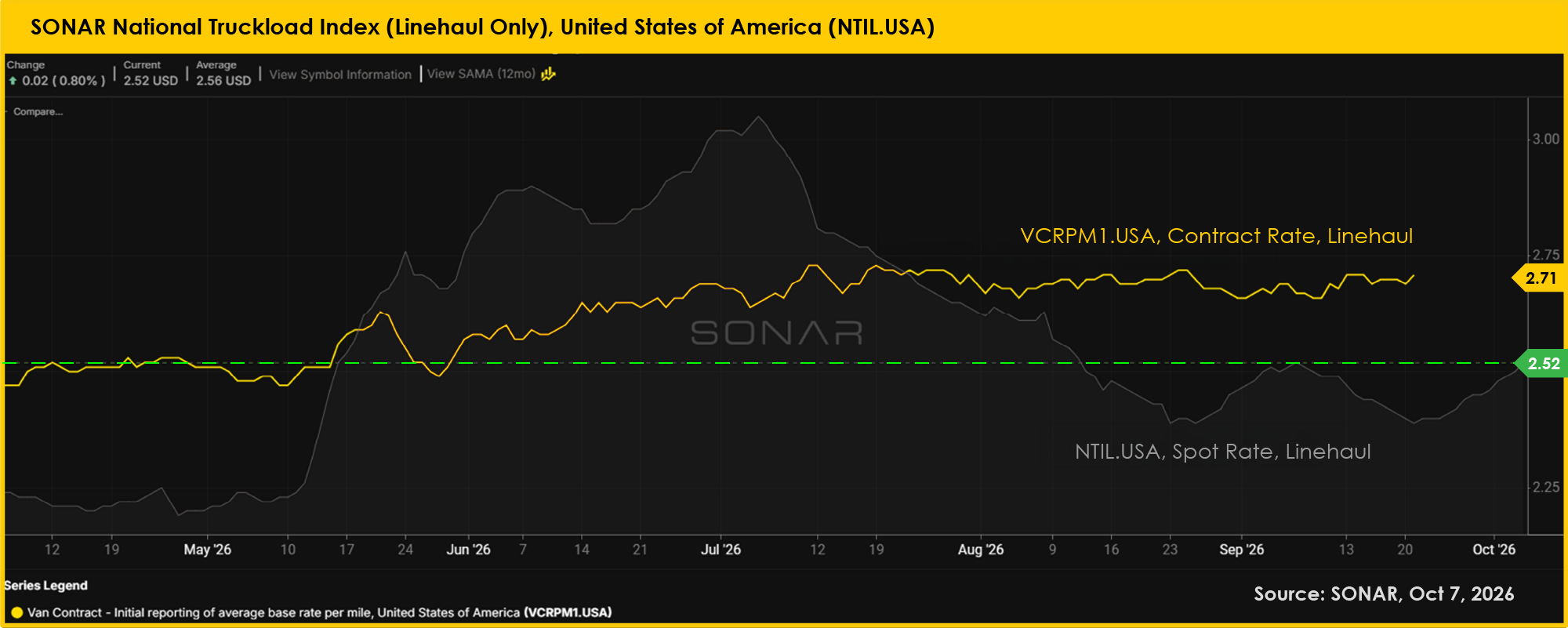
The spot-over-contract inversion seen earlier in 2026 has largely corrected. Spot rates have come off their summer peak while contract rates have moved higher, returning the market to a more typical structure. The key risk now is that another peak-season increase in spot rates could accelerate upward pressure on contract pricing.
2027 Starts From a Higher Cost Base
Even if freight rates stop increasing, 2027 budgets will begin from a much higher exit point than 2026 began. Simply annualizing late-2026 contract levels would create roughly 4–5% inflation versus the 2026 average before any further market increase, bid pressure, or fuel change. With available capacity still constrained, expect elevated pricing over the medium term.
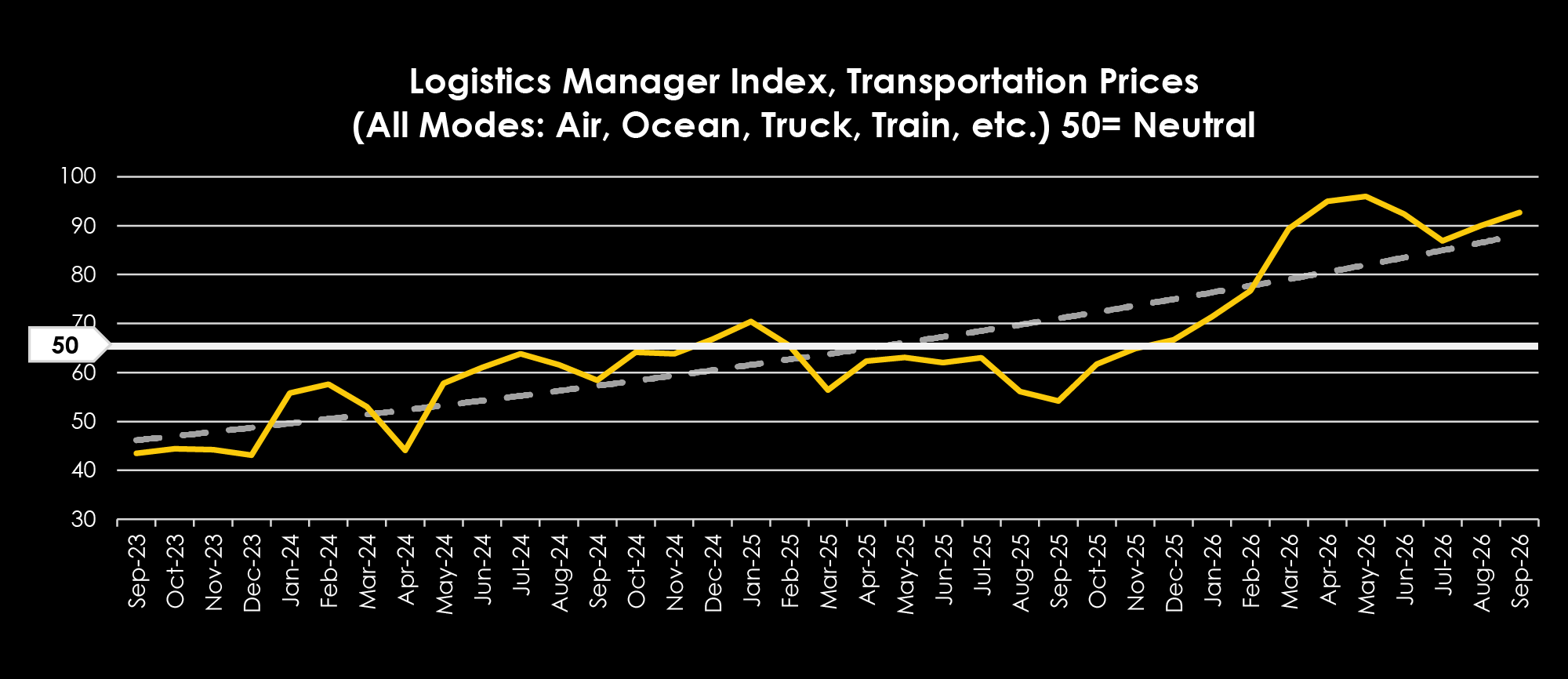
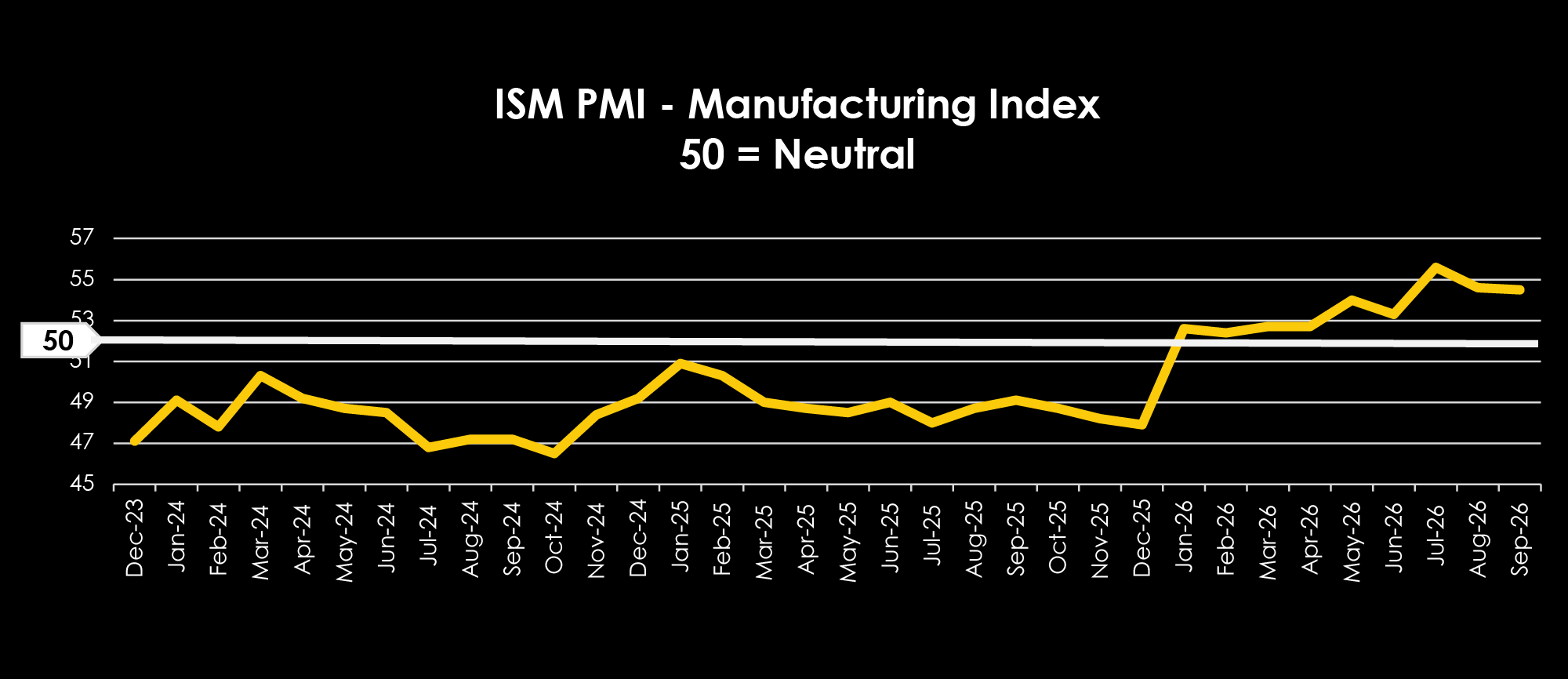
Manufacturing activity continued to increase in Q3, while capacity drove transportation costs higher.
The Transportation Price Index from the Logistics Managers’ Index (LMI) rose again in September, indicating transportation prices continue to increase at one of the fastest rates in recent years, driven mainly by a shortage of trucks. After a brief improvement in August, truck availability tightened again, and respondents expect capacity to remain limited over the next year. With fuel prices adding to the pressure and holiday inventory soon moving to retailers, shippers should plan for higher costs through peak season.
Source: LMI
U.S. manufacturing grew for the ninth straight month, according to the ISM Manufacturing PMI, as factories kept taking in new orders and running at a strong pace. More goods being made means more freight to move, which adds demand on a market that already has too few trucks. With ISM®’s Customers’ Inventories Index still low on inventory, steady shipping volumes and pressure on costs heading into peak season can be expected.
Source: PMI
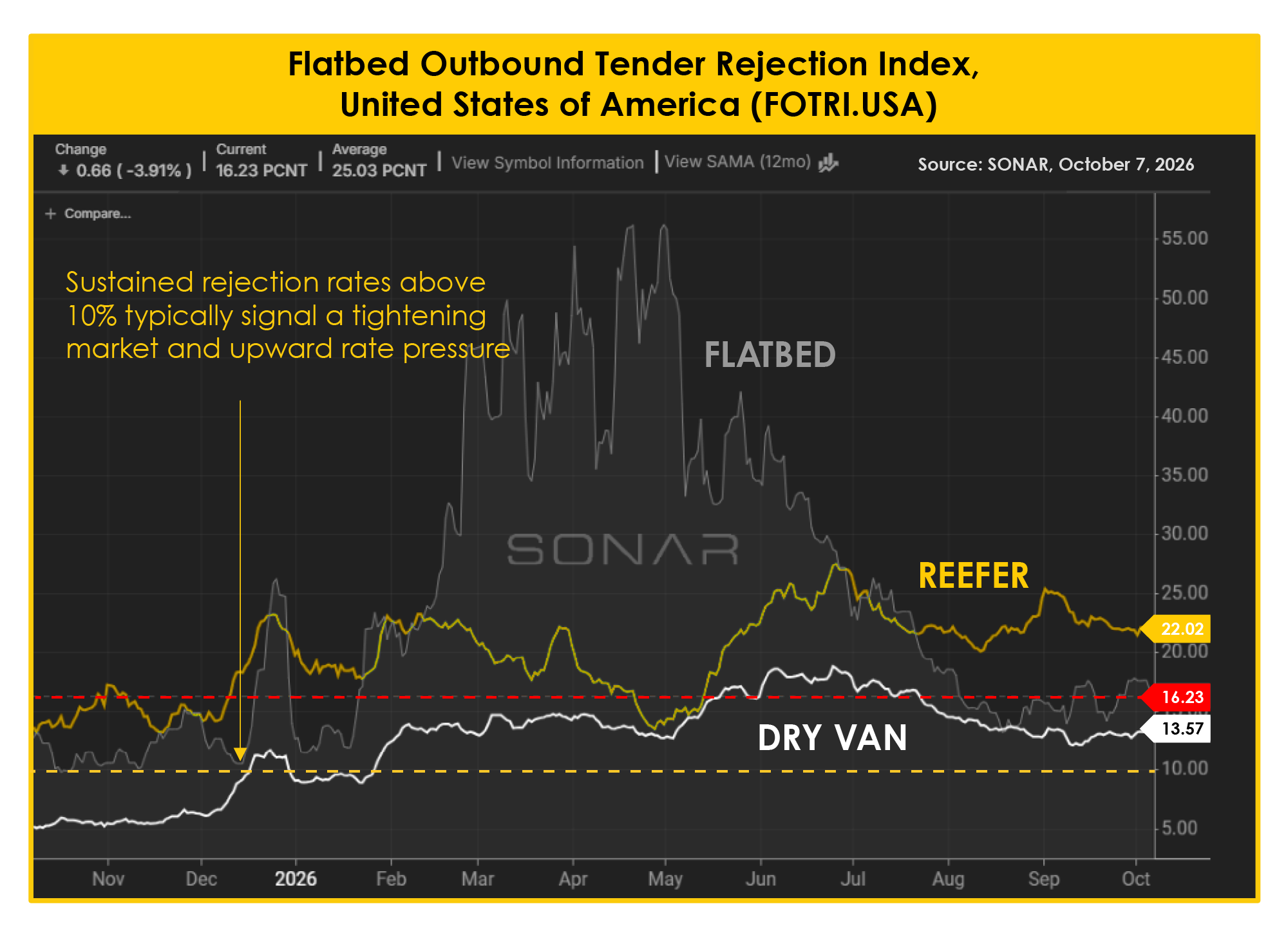
New trucking capacity is entering the market slowly, leaving the market more sensitive to increases in shipping demand.
Q3 average EDI tender rejection rates:
Capacity remains constrained
Dry van rejection rates have eased from mid-year highs but remain above normal market levels. Reefer and flatbed continue to show even tighter conditions, with reefer still above 20%.
Pressure remains on pricing
Historically, sustained rejection rates above roughly 10% have been associated with stronger spot-market pressure and greater carrier leverage. Current levels continue to support elevated contract pricing into Q4.
Peak season remains the key risk
The recent moderation is encouraging, but the market has not normalized. Seasonal freight, weather, or even modest demand increases could tighten capacity quickly again.
Source: FreightWaves SONAR October 7, 2026
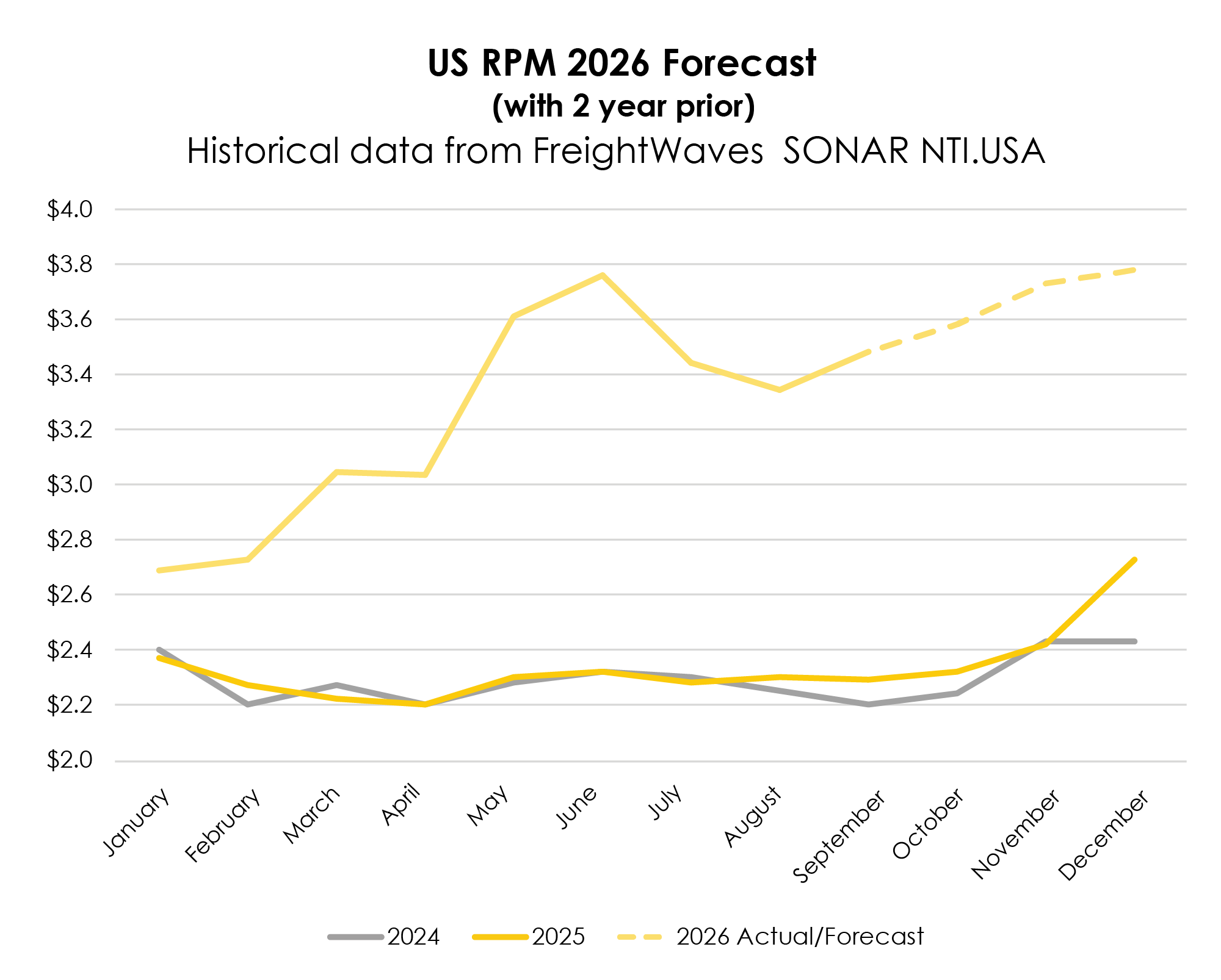
Fuel is accelerating rate increases, but underlying supply-demand dynamics remain the primary driver of inflation.
Source: FreightWaves SONAR October 7, 2026
Contract rates have caught up with the spring surge in spot rates, returning to more typical pricing pattern.
The FreightWaves SONAR Supply Chain Pricing Power Index, which shows whether shippers or carriers have the upper hand in setting rates, held near 74 in September, close to its highest level since early 2022. After more than three years below the neutral 50 mark, the index has indicated that carriers have power for the past three quarters. Conditions are still below the extremes of the pandemic, but shippers have less negotiating leverage than at any time since 2022. Carriers are likely to keep that advantage through peak season. Shippers should expect firm pricing in upcoming bids, and building provider relationships will help ensure access to capacity.
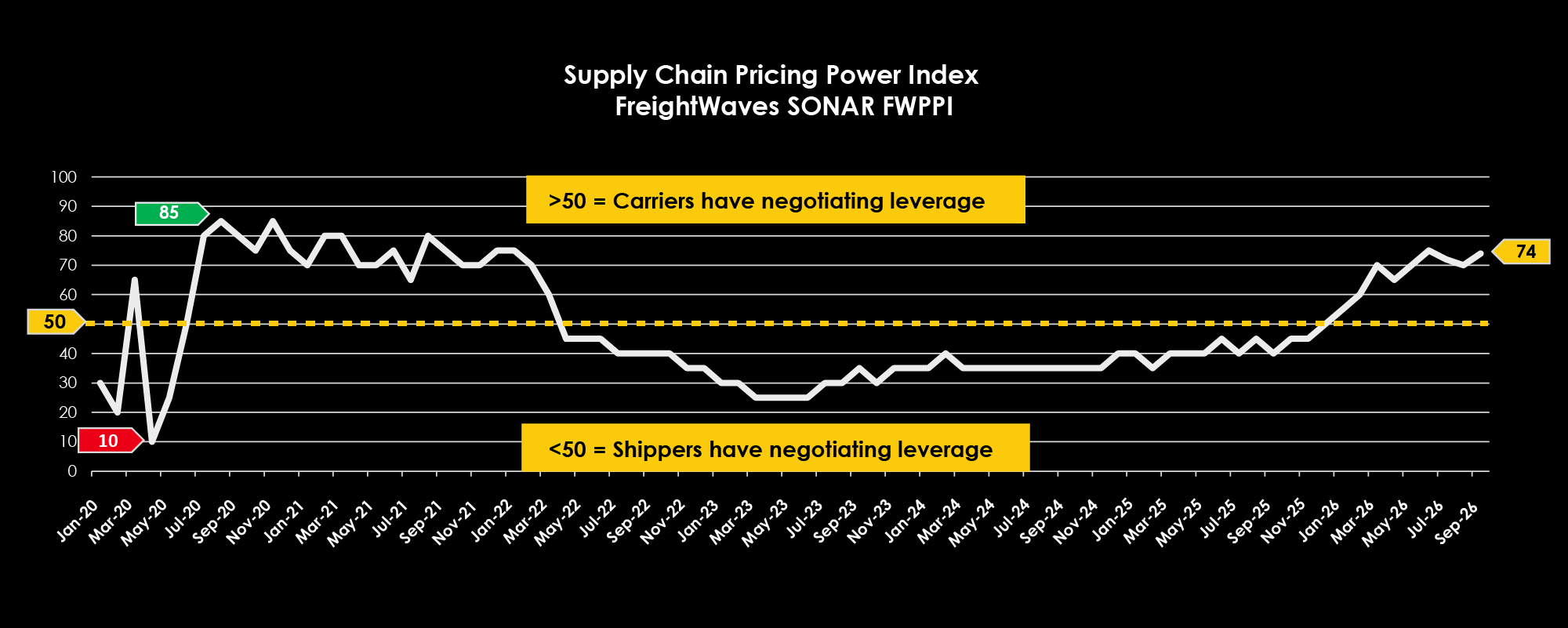
Source: FreightWaves Sonar October 7, 2026
Your Barometer For Ease of North American Cross-Border Freight
Conditions eased slightly, but limited capacity and high fuel costs continue to challenge cross-border shippers.
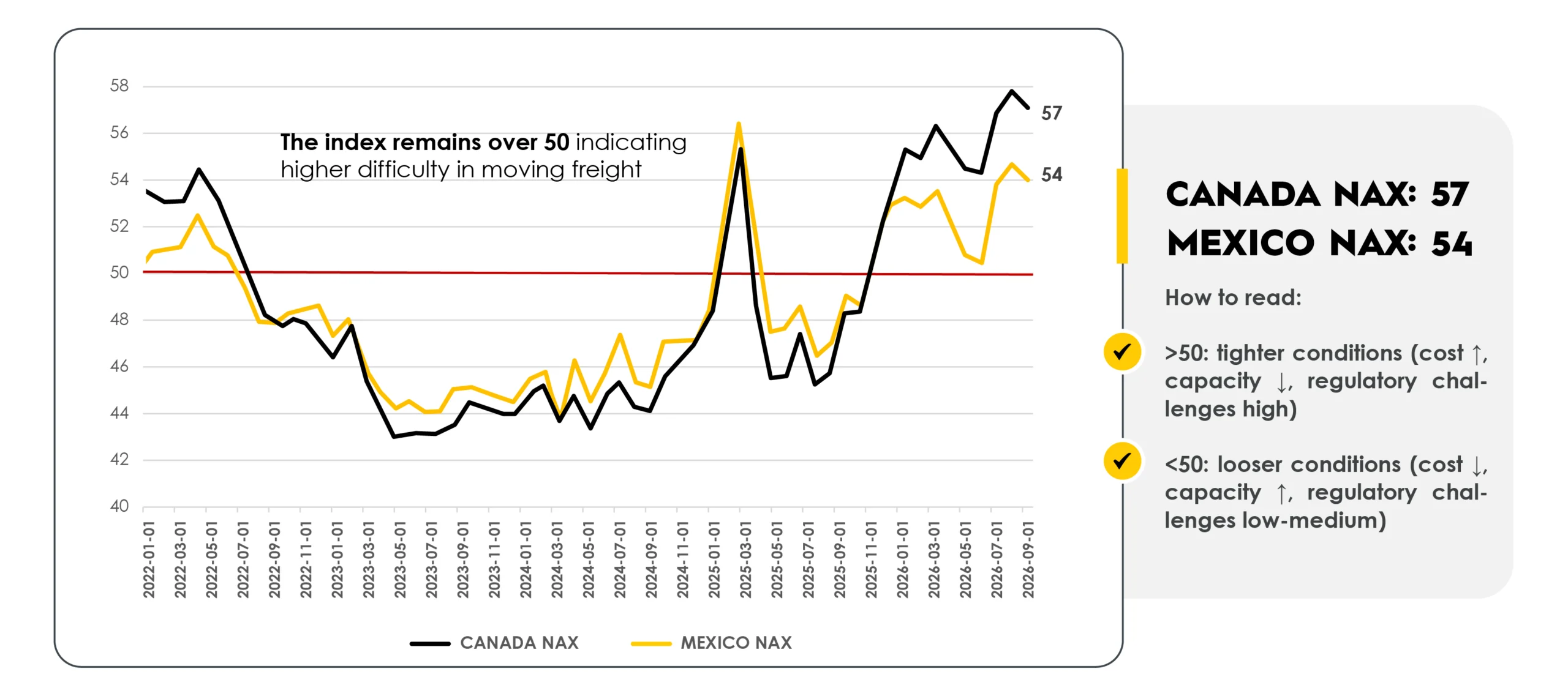
Source: NAX October, 2026

Dry van rates are expected to stay well above last year, driven by fewer available trucks rather than strong demand. Capacity can tighten quickly when volumes rise, and high fuel costs may push some carriers out. Expect volatility through the holidays and year-end.

LTL rates are expected to stay steady, with carrier rate increases likely in December and January, especially for shippers contracting directly with carriers. With truckload capacity tight, more freight is moving to LTL, giving carriers added pricing leverage.

Flatbed markets are tightening rapidly due to construction, infrastructure, and industrial demand. Expect continued upward pressure on rates through peak season.

Refrigerated capacity tightened as seasonal shipping demand increased. Rates are not expected to drop significantly through the end of the produce season, with some potential relief in the fall before protect-from-freeze demand increases.

Intermodal volumes are expected to continue growing as shippers look for alternatives to a tighter truckload market. Available intermodal capacity is becoming limited in some origin markets. Shippers who book early will have the best chance of securing capacity and avoiding disruptions.

Expect continued disruption through the fourth quarter. Higher ocean rates, strong imports and rising fuel costs are straining ports, equipment and trucking. Plan for higher costs and longer lead times.

Outbound rates have risen sharply heading into Q4, and unpredictable diesel prices are expected to keep pressure on rates into winter. Driver shortages could add volatility in November and December. Inbound Canada freight remains soft, so shippers can secure capacity below market rates by shopping carefully and booking early.

Trade demand remains strong, with Laredo still the main gateway. Northbound trucks have tightened, and border delays are increasingly driven by equipment, paperwork and congestion, made worse by a new crossing-notice process (AVC). Expect a tight but manageable market through year-end. Plan early, line up carriers and keep documentation ready.

Warehouse demand is strengthening into year-end as inventory levels rebuild and available capacity tightens. For shippers needing peak or overflow capacity, third-party warehousing can provide flexibility without a longer-term space commitment.
Three Planning Scenarios for 2027
Planning Guidance:
For most shippers, a +5% to +8% YoY increase in truckload linehaul is a reasonable base planning range for 2027, with risk for higher rates the first half of the year. The key budgeting point is that 2027 starts from the higher late-2026 rate environment, not the 2026 average. Roughly 4–5% of rate inflation can be created simply by annualizing where contract rates exited 2026, before accounting for new bid pressure or fuel. Fuel should also be budgeted separately because it can move materially independent of linehaul.
Tight conditions will carry into 2027

Expect conditions to be volatile, capacity to be scarce, and deadlines to be challenging. Set expectations internally and externally on the obstacles the entire market will face. Consider additional safety stock where possible. Evaluate other modes and be prepared for sharp spot-rate increases during peak.

Plan YoY rate increases through Q4 and throughout 2027. Separate linehaul, fuel, and accessorial assumptions so changes can be managed independently. Align forecasts and outlook internally and with key transportation providers.

Avoid overcommitting to long-term pricing during elevated market conditions Use shorter terms, indexed structures, mode conversion, and lane-specific strategies where appropriate so you can benefit if conditions soften later in 2027.