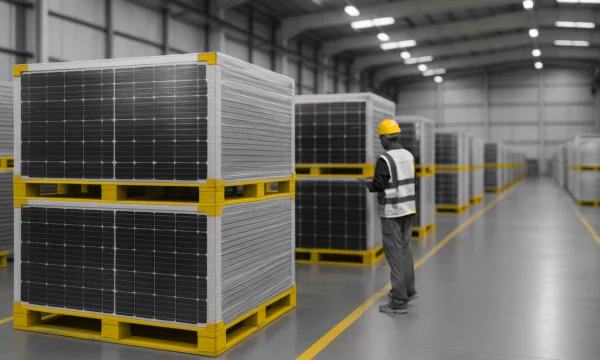
Solar Panel Packaging & Handling Best Practices
Read More
Published: September 29, 2026
Last Updated: October 6, 2026
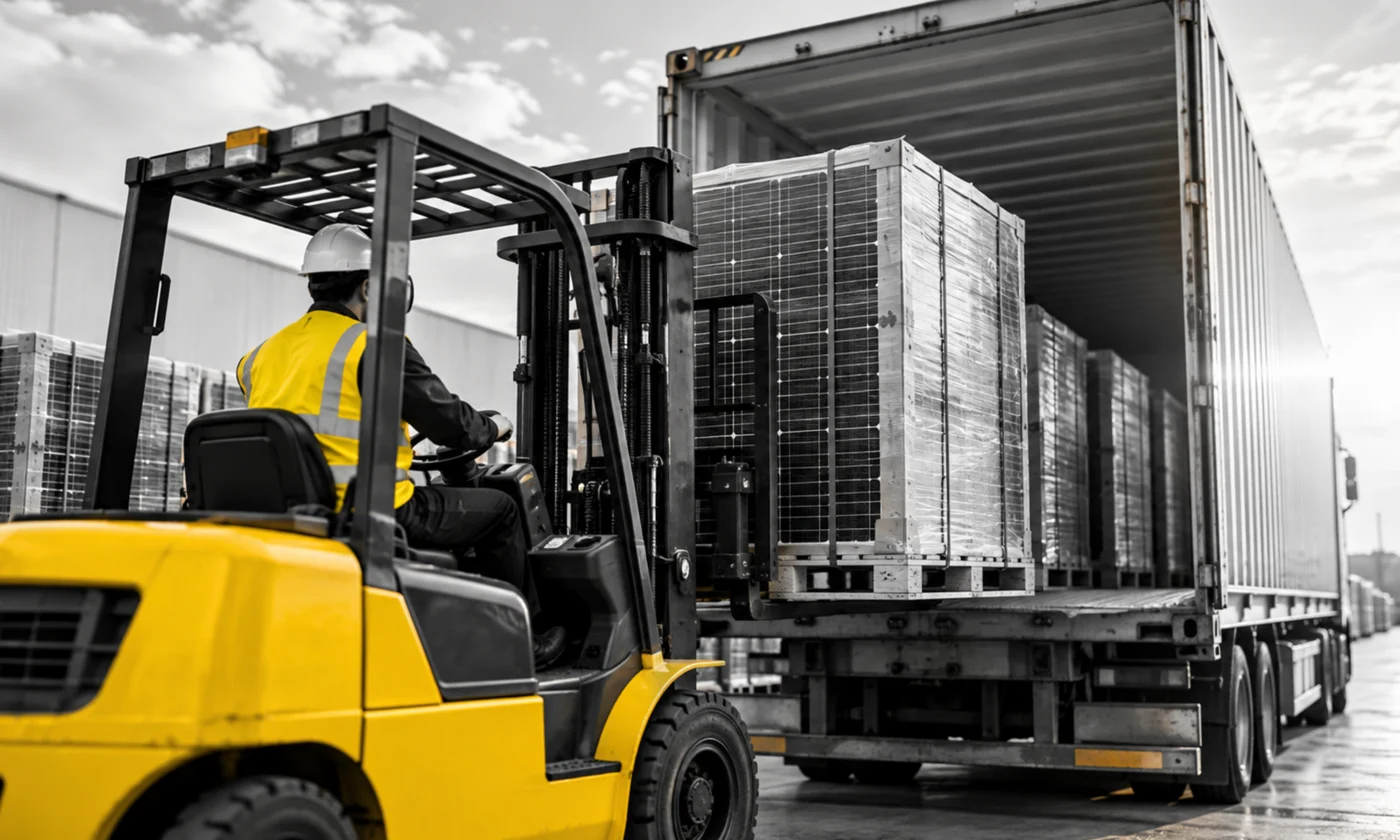
Solar panels can travel hundreds or even thousands of miles before installation, moving by ocean vessel, rail, and truck, including drayage to and from ports and rail terminals. Air freight is rarely practical for full project volumes because of panel weight and cost, but it may be considered for small, urgent shipments such as replacement panels. Along the way, they may pass through ports, warehouses, and staging facilities before reaching their final destination.
How those moves are planned can affect transportation costs, quality of the panels, delivery timing, and even the progress of a solar project.
This article focuses on imported panels for utility-scale projects and explains the transportation methods used to move them, how they’re protected along the way, when temporary storage may be needed, and what to consider before final delivery.
Many utility-scale solar panels installed in North America begin their journey at overseas manufacturing facilities. Domestic module manufacturing is growing, and panels made in North America skip the ocean and port stages, but most of the inland, storage, and final-delivery considerations below still apply. After manufacturing, the panels are packaged according to the manufacturer’s requirements, secured to pallets, and prepared for international transportation.
The palletized panels are then loaded into shipping containers for transportation to the port and ocean shipment to North America. Keeping panels in their original packaging and pallet configuration helps protect them as they move through several stages of transportation and handling before installation.
For a utility-scale project, this process may involve many containers arriving over a period of time rather than one shipment moving from the factory to the project site. Production schedules, vessel availability, and ocean transit times therefore influence when the next stage of transportation can begin.
Once the vessel arrives in North America, the shipment moves into the next stage of the journey: port operations, customs clearance, and inland transportation.
When the vessel reaches North America, containers carrying the solar panels are unloaded at the port and must complete the required customs and import processes before they can continue inland. Solar modules can receive added scrutiny at import, including reviews related to forced-labor rules and antidumping or countervailing duties, so having supplier and supply-chain documentation ready before the vessel arrives can help reduce the risk of holds.
Once a container is released, a drayage carrier can pick it up from the port and transport it to its next destination. Depending on the project’s logistics plan, that may be a nearby warehouse, an inland distribution point, a rail terminal, or another facility where the panels will be staged before final delivery.
At this point, managing the container itself also becomes important. Large solar projects may involve a significant number of imported containers, each subject to port availability, appointment requirements, free-time limits, and equipment-return requirements. Planning container pickup, unloading, and return can help prevent delays and avoid unnecessary demurrage or detention charges.
Container charges are only part of the cost picture. Demurrage is charged when a container stays at the terminal beyond its free time, and detention is charged when the carrier’s equipment is kept too long after pickup. A missed pickup or delivery window can also lead to additional warehouse storage, extra handling, truck waiting time, and redelivery charges. Planning port pickup, unloading, and final delivery as one coordinated schedule, rather than as separate moves, helps keep these costs from adding up across a large project.
Container weight matters too. Containers loaded with solar panels can be heavy, and depending on the load and local road limits, drayage may require tri-axle chassis or overweight permits. Confirming weights early helps avoid surprises at pickup.
For more information on effectively managing large container volumes, controlling costs, and optimizing delivery—check out our Destination Container Management solution.
After leaving the port, the next transportation mode depends on the location of the solar project, the distance the panels need to travel, and the project’s delivery plan.
For some projects, containers may be drayed directly to a warehouse or another staging location. For longer inland moves, rail or truckload transportation may also be used to move the shipment closer to its destination before it is transferred to truck for the remaining legs of the trip.
Many projects also transload panels near the port, moving pallets from ocean containers into domestic 53-foot trailers. Transloading allows the ocean container to be returned sooner, can make better use of trailer capacity for the inland move, and creates a natural point to count and inspect pallets. Because it adds a handling step, it should be performed by a facility familiar with the manufacturer’s handling requirements.
The best route is not necessarily the one with the fewest transportation modes. The objective is to move a large volume of panels efficiently while limiting unnecessary handling and positioning the inventory where it can support the construction schedule.
Neither truck nor intermodal is always the cheaper or better option. Truckload is often a good fit for shorter distances, tight or changing delivery dates, and sites far from a rail terminal. Intermodal can make sense for longer distances and steady, high-volume flows when the schedule allows for longer transit times and there is convenient terminal access at both ends. Manufacturer requirements also matter, since guidance on shock, vibration, and securement can affect which modes and equipment are acceptable.
For help determining if rail is the right mode for your shipments, check out our article When to Ship Intermodal.
Solar panels do not always travel directly from the port or inland terminal to the construction site. Utility-scale projects may use temporary warehousing to create a buffer between the arrival of the panels and when construction crews are ready to install them.
This can be especially useful when international transportation and construction schedules do not line up perfectly. Panels may arrive before the site is ready because of weather delays, permitting changes, site preparation, installation sequencing, or other changes to the construction schedule.
Temporary storage also makes it possible to release panels in phases. Instead of sending a large volume of material to the project site at once, panels can be delivered in quantities that match the site’s receiving and installation capacity. This can reduce congestion, limit the amount of material that needs to be stored on-site, and make unloading and staging easier to manage.
Inventory visibility is what makes phased release work. Tracking containers and pallets by their identification numbers, along with quantities, condition notes from receiving, and current shipment status, helps the project team see what has arrived, what is available for release, and what is already scheduled for delivery.
While panels are in storage, manufacturer requirements for stacking, handling, environmental conditions, and storage duration should continue to be followed.
To learn more about how you can use foreign-trade zone (FTZ) warehouses effectively in your solar supply chain, check out this article. If you are looking for a short- or long-term warehouse in North America and would like TRAFFIX to help, you can view our available space here.
The final transportation stage moves the solar panels from a warehouse or staging location to the construction site.
The type of truck and trailer used depends on factors such as the manufacturer’s requirements, panel and pallet dimensions, site access, and how the panels will be unloaded at their destination. Equipment selection is particularly important at utility-scale solar sites because the unloading method needs to match the site’s available equipment and receiving area.
For example, enclosed dry van trailers protect panels from rain and road debris but are typically unloaded from the rear, which works best when the site has a dock or equipment that can safely reach pallets inside the trailer. Flatbed or step-deck trailers allow pallets to be unloaded from the side with a forklift or telehandler, which can suit sites without docks, but the load must be properly secured and protected from the weather. The right choice depends on the manufacturer’s requirements, pallet dimensions and weight, and the unloading equipment available at the site.
Large utility-scale projects can require many truckloads of panels, and because those loads are typically released from storage in phases, each one should be planned around the equipment and receiving crew available at the site on its delivery day.
This makes the final mile part of the construction plan, not simply a transportation appointment.
Solar panels are designed to spend decades outdoors once installed, but they still need to be protected from damage while they are transported, transferred, stored, and unloaded.
Manufacturer handling requirements should be followed throughout transportation and storage, including any requirements related to packaging, pallet configuration, lifting, stacking, and securing the panels.
Damage prevention also depends on what happens each time the shipment is handled. Forklifts and other handling equipment need to be appropriate for the weight and dimensions of the pallet, and panels should be inspected at transfer points so visible damage can be identified and documented.
At each receiving point, teams should inspect the packaging and pallets, verify piece counts and shipment identification against the paperwork, photograph any visible damage, note exceptions on the delivery receipt before signing, and promptly notify the agreed contact. A visual inspection can identify damaged packaging or obvious breakage, but it does not confirm that panels will perform as expected. Questions about damage that may not be visible should go to the manufacturer or the project’s technical team.
Clear receiving records also support damage claims and help the team arrange replacement panels without holding up installation. It is worth confirming in advance who carries the risk at each stage, including the Incoterms in the purchase agreement, carrier liability limits, and cargo insurance coverage.
Transportation planning can also help reduce risk by making sure each transfer is properly coordinated. Whether panels are moving from a container to a warehouse, from storage to a trailer, or from a trailer to the job site, teams should have the right equipment, space, and handling requirements in place before the shipment arrives.
Before a truck leaves for final delivery, the transportation and construction teams should confirm how the panels will be received.
The site needs suitable access for the delivery equipment, enough room for trucks to enter and maneuver, a designated unloading or staging area, and the correct equipment available to unload the pallets. The unloading plan should also account for where the panels need to go next so they are not moved more times than necessary.
Before each truck is dispatched, confirm that:
The site contact or construction manager should confirm these items with the transportation team before the truck is released, typically the day before delivery.
For projects receiving multiple loads, someone needs to own the release schedule when construction plans change. Before deliveries begin, the customer, warehouse, and transportation team should agree on a point of contact for each party, how delivery quantities are set, how much notice is needed to change them, and how inventory will be held or released. With
Not every project follows exactly the same route. Some panels may travel directly from the port toward the project, while others may move by rail or spend time in temporary storage before final delivery.
What remains consistent is the need to protect the panels as they move through each stage and match transportation with the needs of the project. From the manufacturer’s pallet to final unloading at the solar site, each transportation decision affects how efficiently thousands of panels make the journey from production to installation.
TRAFFIX can help coordinate container management, inland transportation, warehousing, and final delivery as one plan, so each stage supports the next.
Planning a solar project? Connect with TRAFFIX to discuss transportation and storage options that align with your construction schedule.
For a broader look at the logistics challenges shaping utility-scale solar projects, take a look at The State of Solar Logistics Whitepaper for insights into planning transportation, storage, and delivery across the solar supply chain.