Shipping Freight into Mexico: A Guide to Customs Clearance - TRAFFIX

Shipping Freight into Mexico: A Guide to Customs Clearance

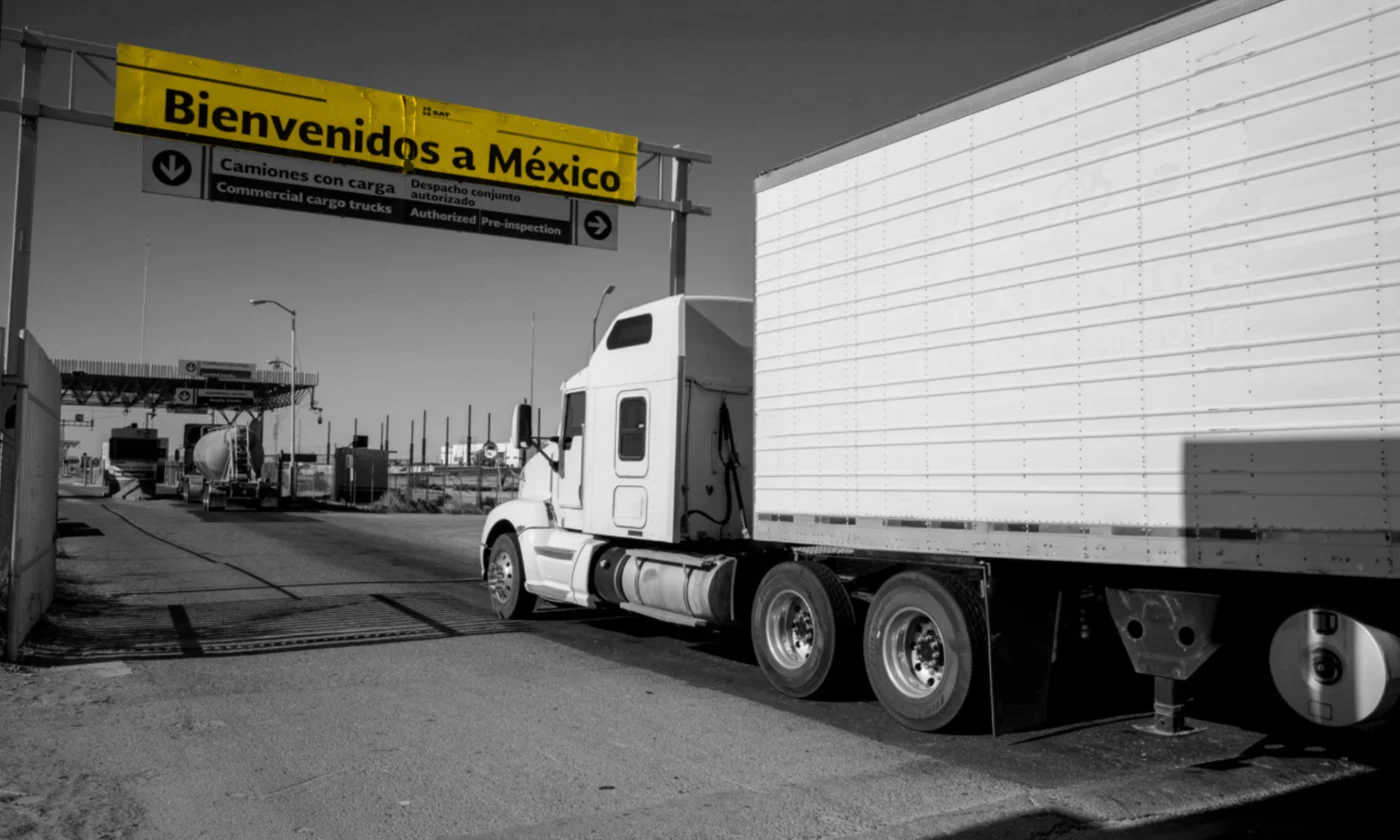
truck crossing mexico cross-border

Shipping freight into Mexico raises a lot of questions before a truck ever reaches the border. What documents do you need? How do you know if your goods qualify for preferential treatment under USMCA? Who is responsible for customs clearance? And what issues can delay a shipment at the border? 

For shippers, understanding these requirements before freight is in transit can help prevent documentation issues, unexpected duties, customs holds, and delays that can disrupt delivery schedules. 

This guide explains what shippers need to know before moving freight into Mexico, including the documentation required for customs clearance, Mexican tariff classification, USMCA eligibility, and how to prepare for a more predictable crossing. 

What Documents Are Required
to Ship Freight Into Mexico? 

The pedimento de importación is the official Mexican customs declaration used to clear commercial freight into Mexico. It contains information about the importer, merchandise, customs regime, value, applicable duties, and other details required for clearance. 

The pedimento de importación provides Mexican customs with the information needed to verify the shipment, assess duties and taxes, confirm compliance with import requirements, and authorize the goods to legally enter Mexico. It also serves as an important record demonstrating that the goods were properly imported. 

The pedimento is supported by shipment and commercial information that varies depending on the commodity and transaction. Common requirements include: 

  • Commercial invoice: A commercial invoice is a legal document used in international trade that details the goods being sold and shipped between a buyer and seller. It provides details such as the buyer and seller, product description, quantity, value, and other commercial information.  

    Customs authorities rely on the commercial invoice to verify the shipment and accurately assess applicable duties, taxes, and import requirements. 
  • Bill of Lading (BOL): A transportation document that records the movement of goods and typically includes the shipper, consignee, carrier, origin and destination, and a description, quantity, and weight of the freight.  

    During Mexican customs clearance, it helps customs and the customs broker verify the shipment and reconcile the physical freight with the information declared in the customs documentation.  
  • Importer Registro Federal de Contribuyentes (RFC): This is the Mexican taxpayer identification number assigned by Mexico’s tax authority, SAT, and used to identify the importer responsible for the shipment. Since January 1, 2025, the RFC must be included on import declarations regardless of shipment value or mode.  

    A valid RFC is critical to customs clearance because it connects the import transaction to the appropriate registered Mexican taxpayer and is required for customs declarations and other import formalities.  
  • USMCA Origin Information: USMCA origin information demonstrates that goods meet the agreement’s rules of origin and may therefore qualify for preferential tariff treatment when moving between Mexico, the United States, and Canada.  

    Rather than requiring a specific certificate form, the required certification includes nine prescribed data elements about the certifier, exporter, producer, importer, goods, HS classification, and origin criteria.  

    The prescribed data elements include: 
  1. Certifier 
  2. Exporter
  3. Producer 
  4. Importer
  5. Description and HS tariff classification of the good
  6. Origin criterion 
  7. Blanket period, if applicable
  8. Authorized signature and date 
  9. Unlike NAFTA, USMCA does not require a specific certificate-of-origin form; those data elements can be provided on an invoice or another document. 
  • Permits, certificates, or NOM documentation: Depending on the commodity, additional Mexican authorities may require permits, certificates, or documentation demonstrating compliance with applicable regulations, including certain Normas Oficiales Mexicanas (NOMs), Mexico’s mandatory technical standards.  

    These documents can demonstrate that regulated goods meet requirements related to areas such as safety, labeling, health, or product specifications and are eligible to be imported. 
  • Value documentation: Value documentation supports the declared customs value of imported goods and may include the commercial invoice, purchase orders, contracts, payment records, freight or insurance costs, and other records relevant to determining transaction value.  

    Accurate supporting documentation is important because customs value is used to calculate applicable duties and taxes and may be reviewed by Mexican customs to substantiate the amount declared. 

Commercial importers also generally need to be registered in Mexico’s Padrón de Importadores, while certain commodities require registration in a specific sector., while certain commodities require registration in a specific sector. 

The important part for shippers is understanding which requirements apply before transportation is scheduled. A customs broker can confirm the documentation, registrations, classification, and commodity-specific requirements for the shipment so that transportation can be planned around a realistic clearance process.  can confirm the documentation, registrations, classification, and commodity-specific requirements for the shipment so that transportation can be planned around a realistic clearance process. 

For a broader look at how shipments move across the Mexico border, including customs brokerage, border crossings, transloading, and transportation options, explore our Complete Guide to Mexico Cross-Border Transportation. 

How Can Shippers Make the
Customs Process More Efficient? 

For shipments entering Mexico, providing accurate information early gives the importer, customs broker, and transportation provider time to review requirements, identify potential issues, and resolve them before the freight reaches the border. 

  1. Consistent information across all documentation 
    Consistency across customs documentation matters because the Mexican customs authorities and customs brokers use multiple documents to verify the same shipment information. 

    Reviewing shipment details and documentation before submission helps identify missing information, inconsistencies, classification issues, or other potential errors before the freight reaches customs. 

    Resolving these issues in advance reduces the likelihood of corrections, documentation resubmissions, inspections, or costly holds at the border, helping the shipment move through customs more efficiently. 
  2. Confirm the Mexican tariff classification 
    A U.S. HTS classification should not automatically be assumed to be the classification used for import into Mexico. While both countries use the international Harmonized Tariff System (HTS) as their foundation, Mexico classifies goods using an eight-digit fracción arancelaria, plus two additional NICO (Número de Identificación Comercial) digits used to further identify the commodity.  

    Getting the Mexican classification right matters because it can influence the applicable duty and can affect the regulatory requirements associated with the product. An incorrect classification can therefore lead to incorrect duty calculations or problems identifying requirements that must be satisfied before the goods can clear customs.  

    For a new product or trade lane, confirming the Mexican tariff classification with your customs broker before the first shipment helps identify these requirements and can make subsequent moves much easier to repeat. 
  3. Verify USMCA eligibility 
    Freight shipped from the United States or Canada does not automatically qualify for preferential USMCA treatment. Eligibility depends on whether the goods satisfy the applicable rules of origin and whether the required origin information is available to support the claim. 

    USMCA does not require a specific certificate form, but the certification must contain nine minimum data elements. Verifying eligibility and gathering this information before the shipment moves helps ensure preferential tariff treatment is claimed correctly and reduces the risk of customs questions, corrections, or unexpected duties.  

    Establishing that information as part of the shipper’s documentation process can make it easier to manage recurring cross-border freight. 
  4. Coordinate customs and transportation as one process 
    Coordinating customs clearance and transportation means planning the physical movement of the freight around the requirements and expected timing of clearance, rather than treating them as a separate process. This is especially important when freight changes carriers or equipment at the border.  

    In practice, this means ensuring the customs broker and transportation team have the required shipment information early and maintaining visibility into whether documentation has been reviewed, the shipment is ready for clearance, and any outstanding issues need to be resolved.  

    That visibility allows carriers to plan driver dispatch equipment positioning, border transfers, transloading, and delivery appointments around the expected customs timeline.  

When these activities are coordinated in advance, the transportation team can make decisions based on the freight’s actual customs readiness. This can help reduce unnecessary waiting, missed handoffs, equipment or driver delays, and downstream delivery disruptions while creating a more predictable cross-border move. 

Looking for a quick reference before your freight moves? Download our Mexico Cross-Border Pre-Crossing Checkpoints to review key customs and transportation items at each stage of the crossing process.
Building a More Predictable
Pre-Crossing Process 

Before freight is dispatched toward the Mexican border, confirm that: 

  • The importer is properly registered and any applicable sector requirements have been addressed. 
  • The Mexican tariff classification and NICO have been confirmed. 
  • Product descriptions, quantities, weights, values, part numbers, origin information, and importer details are consistent across documentation. 
  • Applicable NOMs, permits, certificates, and other import requirements have been identified. 
  • The customs broker has received and reviewed the required shipment information. 
  • Carrier dispatch, border handoffs, transloading, and delivery appointments are aligned with the expected customs-clearance timeline. 

For recurring products and lanes, these steps can become easier to repeat over time as classifications are established, documentation is standardized, responsibilities are clarified, and the shipper, broker, and transportation teams develop a consistent operating process.

Better Cross-Border Planning Starts
Before the Truck Reaches the Border 

Successful customs clearance into Mexico starts well before a shipment reaches the border.  

Confirming importer requirements, tariff classification, USMCA eligibility, documentation, and commodity-specific requirements in advance gives shippers and their customs and transportation partners time to identify and resolve potential issues before they disrupt the move.  

For companies shipping into Mexico regularly, building these checks into a repeatable pre-crossing process can help reduce delays, improve coordination, and create a more predictable cross-border supply chain. 

Moving freight into Mexico? Talk to a TRAFFIX cross-border expert about optimizing your Mexico cross-border transportation strategy.