Shipping Between Canada and Mexico: How to Move Cargo Seamlessly Across Three Countries
Read More
Published: October 28, 2026
Last Updated: October 28, 2026
Moving a truckload from Mexico into the United States does not always mean one truck, trailer, and carrier travel from pickup to final delivery. Depending on the operating model, different carriers may handle different portions of the trip, tractors may be swapped at the border, or the freight itself may be transferred into another trailer.
Understanding how that handoff works can help shippers plan for transit time, equipment, freight handling, and delivery requirements before the load moves. This article follows a typical northbound truckload from pickup in Mexico through the border-crossing process and into U.S. linehaul, while explaining the different ways freight can transition between the Mexican and U.S. carrier networks.
The first transportation leg begins when a Mexican carrier picks up the truckload at the shipper’s facility and moves it toward the designated border crossing.
Before the truck departs, the shipment information and required customs documentation need to be in place to support the export and U.S. import processes. The specific requirements vary depending on the commodity, origin, destination, and parties involved in the transaction.
Once the truck is dispatched, the Mexican carrier handles the domestic portion of the move toward the border. This is where coordination with the customs process becomes important: the documentation and shipment information need to progress alongside the physical freight, so the load is prepared for the next stage of the cross-border journey.
When the shipment reaches the border, the transportation and customs processes begin to converge. Required shipment information must be submitted to the appropriate parties and government agencies so the load can proceed through the commercial border-crossing process.
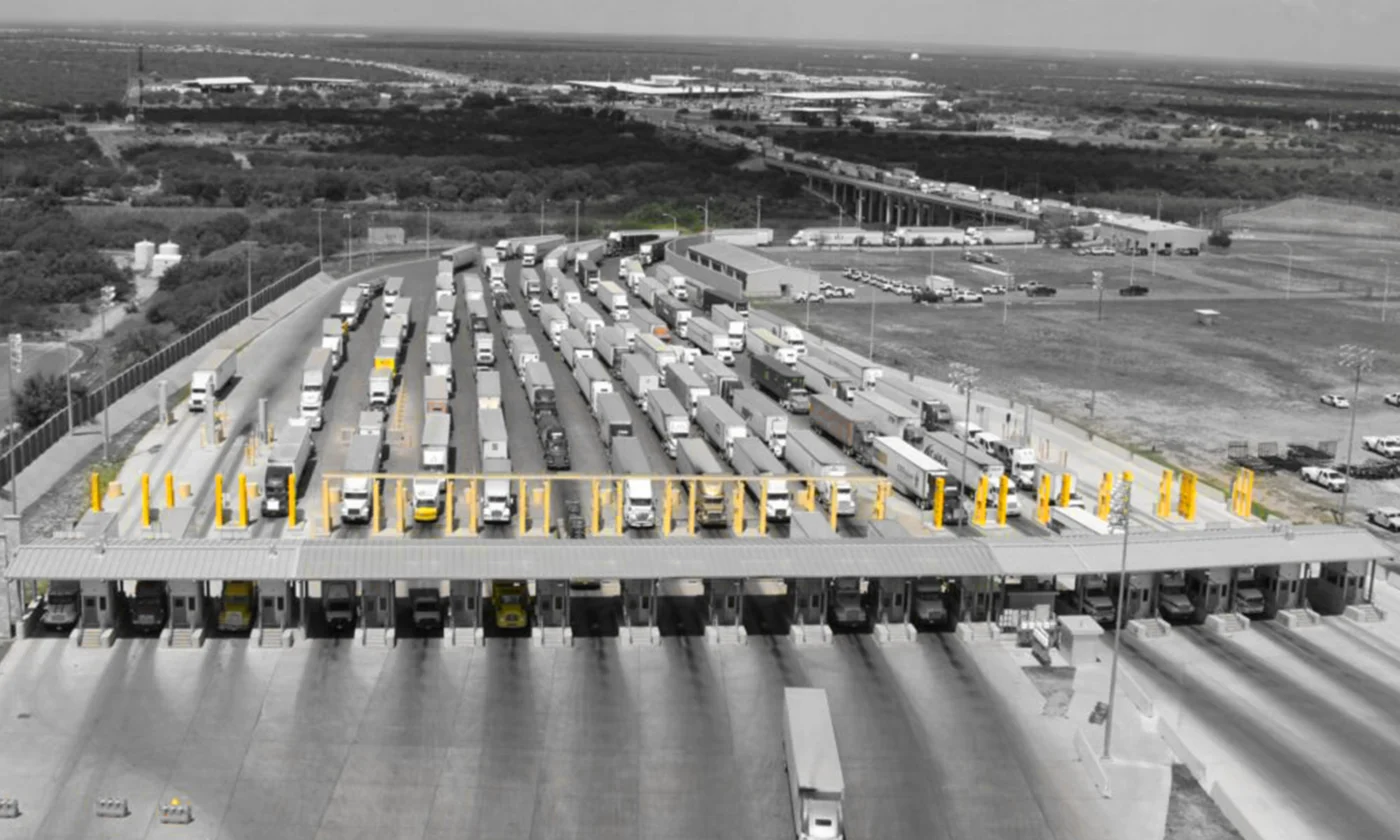
For a typical northbound move, a local drayage carrier handles the actual border crossing. The loaded trailer moves through the designated commercial prot of entry, where U.S. Customs and Border Protection (CBP) processes the shipment and may refer it for additional inspections. Other government agencies may also be involved depending on the commodity.
After the shipment is released into the United States, what happens next depends on the operating model selected for the move. We will elaborate on the three common arrangements in the next section.
There is no single operating model for moving every truckload across the U.S.–Mexico border. The carrier, tractor, trailer, and freight do not necessarily make the entire journey together.
Three common arrangements include:
Transload: The freight is unloaded from the trailer used for the Mexican portion of the move and transferred into another trailer for the U.S. leg of the journey. Because the cargo is physically handled, packaging, loading configuration, handling requirements, and damage-prevention measures should be considered before the shipment moves.
Tractor swap: The freight remains inside the same trailer, but a different tractor and/or driver takes over the next leg of the journey. This allows the shipment to transition between carriers or operating authorities without transferring the cargo itself.
Through-trailer: The same trailer continues through the cross-border movement and into the next transportation leg without the freight being transferred into different equipment. The tractors and carriers involved may still change during the journey.
The appropriate model can depend on factors such as carrier authority, equipment availability, lane structure, and the requirements of the shipment.
The difference between a transload, tractor swap, and through-trailer arrangement is more than what happens to the trailer at the border. The operating model can affect how the entire shipment needs to be planned.
A transload, for example, introduces an additional physical handling point. A tractor swap keeps the freight in the same trailer but requires coordination between the carriers and equipment involved. Through-trailer service can reduce equipment changes, but it depends on having the appropriate carrier network and trailer available for the move.
The operating model can also influence timing. Carrier arrivals, customs processing, drayage, transload appointments, equipment availability, and outbound pickup all need to connect. If one stage takes longer than expected, the schedule for the next stage may need to adjust.
Understanding the planned operating model before pickup gives shippers a clearer picture of how their freight will move, where responsibility will change hands, and what needs to be coordinated along the way.
When a shipment is moving under a transload model, the inbound trailer is brought to a facility where the freight is unloaded and transferred into the equipment that will continue into the U.S. carrier network.
Carrier and facility vetting can be particularly important in a transload arrangement because multiple parties may take responsibility for the freight at different stages of the journey.
This is especially important for temperature-controlled or perishable shipments that require continuous environmental monitoring. Shippers should understand how temperature requirements will be maintained and documented during the transfer, as well as how monitoring will continue as the freight moves from one trailer and carrier to the next.
This additional handling makes planning particularly important for freight that is fragile, oversized, unusually configured, or subject to specific loading and securement requirements.
Because the freight is physically handled during a transload, any shipment-specific handling requirements need to be identified before the shipment reaches the transload facility so the appropriate equipment, space, and handling process can be arranged.
The condition and configuration of the freight should also be documented as it changes custody. This creates a clearer record of how the shipment was received and transferred before the next transportation leg begins.
Once the freight has cleared the necessary border processes and any required equipment or carrier handoff is complete, the shipment begins the U.S. linehaul portion of its journey. From there, a U.S. carrier moves the load toward the final consignee, much like a traditional domestic truckload.
But what happened at the border still matters.
If clearance takes longer than planned, the outbound carrier may need to adjust its pickup. If a handoff is missed, the shipment could lose time waiting for the next available option. A delay at the border can also affect a delivery appointment hundreds of miles away.
For that reason, shipment visibility should extend across the the full cross-border move rather than stopping each time responsibility transfers from one provider to another. The shipper should be able to understand where the freight is in the journey, whether the next stage is on schedule, and when it is expected to reach its final destination.
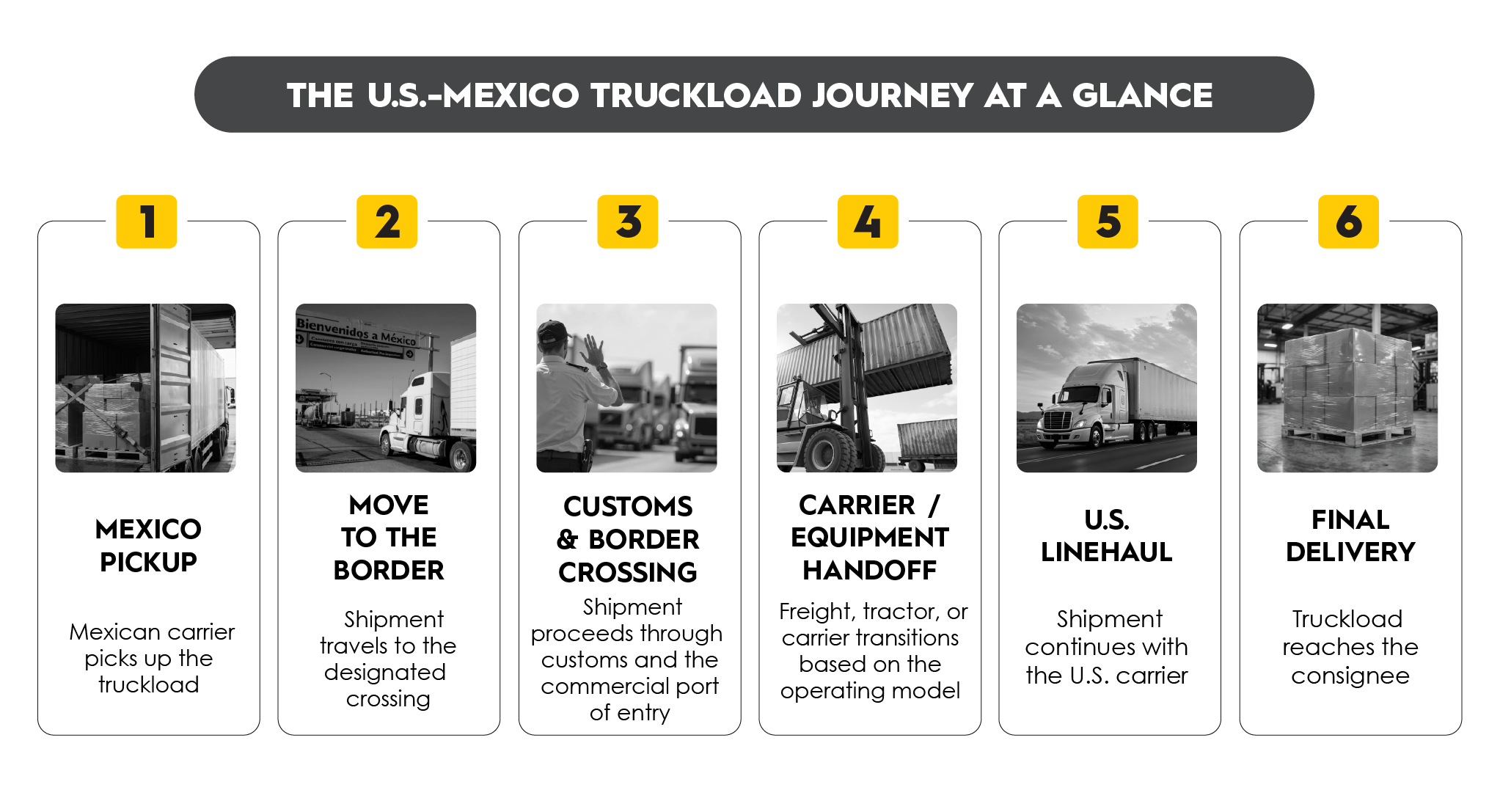
The exact process can vary depending on the lane, commodity, carrier network, and operating model used for the shipment.
A northbound truckload may involve several transportation stages between pickup in Mexico and final delivery in the United States, but those stages should be planned as one continuous move.
Knowing where the carrier, tractor, trailer, or freight may change hands makes it easier to plan equipment, handling requirements, timing, and delivery expectations before the shipment begins.
The right operating model depends on the lane, commodity, equipment requirements, and needs of the shipment. Understanding that model upfront gives shippers a clearer picture of what will happen to their freight at the border and how each stage connects to final delivery.
Moving truckload freight between Mexico and the United States? Contact TRAFFIX to discuss your cross-border transportation needs.